
Commercial Real Estate for Beginners: Start Smart
New to commercial real estate? Learn the basics, property types, and how to get started investing in 2026. Straightforward guide for beginners.
You've heard people talk about commercial real estate like it's a gold mine. And honestly, it can be. But when you're just starting out, the whole thing feels like a different language. Terms like cap rates, triple net leases, and NOI can make your head spin. Here's the truth: commercial real estate for beginners doesn't have to be complicated. You just need to understand the basics, know what you're getting into, and take it step by step. Let's break this down in plain English.
What Commercial Real Estate Actually Means
Commercial real estate is any property you use to make money. Period.
It's not your house. It's not your cousin's vacation cabin.
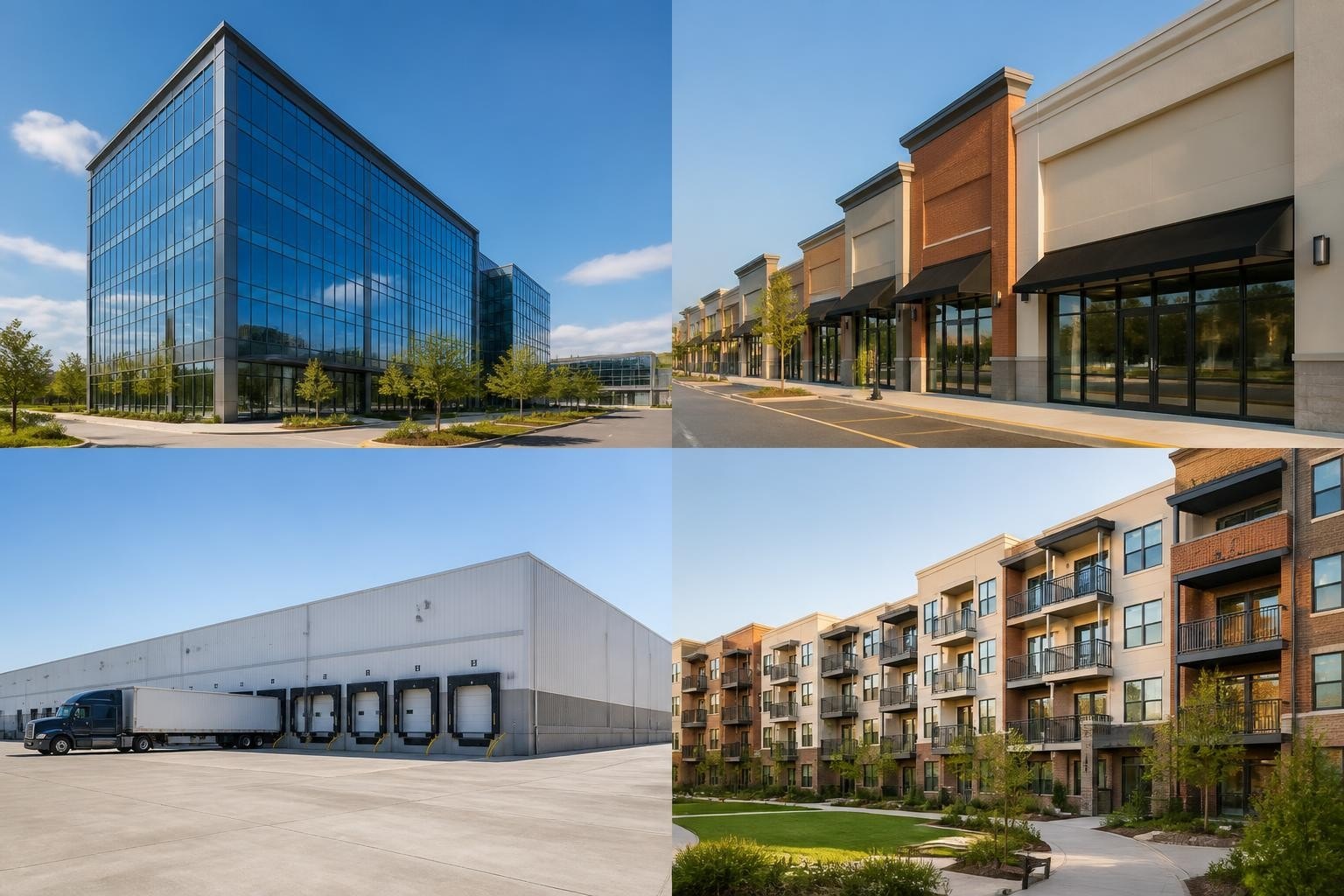
It's the stuff businesses rent or own to operate. Office buildings. Shopping centers. Warehouses. Apartment complexes with five or more units.
The main difference from residential? You're buying a business, not a home.
When you buy residential real estate, you think about bedrooms and kitchens. With commercial, you think about income, tenants, and lease terms.
The Money Game Changes
In residential deals, banks care about your credit score and whether you can afford the mortgage.
In commercial deals, they care about whether the property makes money.
If the building generates enough rent to cover expenses and then some, lenders feel good about it.
Your personal finances still matter. But the property's income matters more.

Different Types of Commercial Properties
Not all commercial real estate works the same way. Each type has its own rules, risks, and rewards.
Office Buildings
These range from small professional buildings to massive downtown towers.
Class A: Brand new, prime location, fancy amenities. Highest rents.
Class B: Older but well-maintained. Middle-of-the-road pricing.
Class C: Needs work. Lower rents, higher risk.
Office space got hit hard during COVID. A lot of companies went remote. But as workers return to offices, opportunities in flexible workspaces are growing in 2026.
Retail Properties
Strip malls, shopping centers, standalone stores.
The trick? Location, location, location.
You want high traffic areas where people actually shop.
Online shopping hurt retail. But some sectors (grocery, restaurants, service businesses) still do great.
Industrial and Warehouse
Factories, distribution centers, storage facilities.
This sector is hot right now. E-commerce needs warehouses everywhere.
Data centers are booming too, with projections showing massive growth through 2030.
Multifamily (Apartments)
Buildings with five or more rental units.
Anything under five units counts as residential, not commercial.
Why beginners love multifamily:
- People always need housing
- Multiple tenants spread your risk
- Steady monthly income
- Easier financing than other commercial types
If one tenant leaves, you still have income from others.
Special Purpose
Hotels, gas stations, car washes, self-storage.
These need specialized knowledge. Not where most beginners start.
But they can be profitable if you know what you're doing.
How Commercial Real Estate Makes You Money
You profit two main ways: cash flow and appreciation.
Cash flow is what's left after you collect rent and pay all the bills.
Mortgage, property taxes, insurance, maintenance, property management. Everything.
What's left over? That's your monthly profit.
Appreciation is when the property value goes up over time.
You buy a building for $500,000. Five years later, it's worth $650,000.
That's $150,000 in equity you can tap into or cash out when you sell.
| Income Source | How It Works | Risk Level |
|---|---|---|
| Monthly Rent | Tenants pay lease payments | Low if you have good tenants |
| Appreciation | Property value increases | Medium (market dependent) |
| Forced Appreciation | You improve the property | Low to Medium (you control it) |
| Tax Benefits | Depreciation, deductions | Low (talk to your CPA) |
You can also force appreciation by improving the property or raising rents. Make the building worth more, and you create equity.
Understanding the Numbers That Matter
Commercial real estate for beginners gets real when you start looking at numbers.
Don't worry. You don't need to be a math wizard.
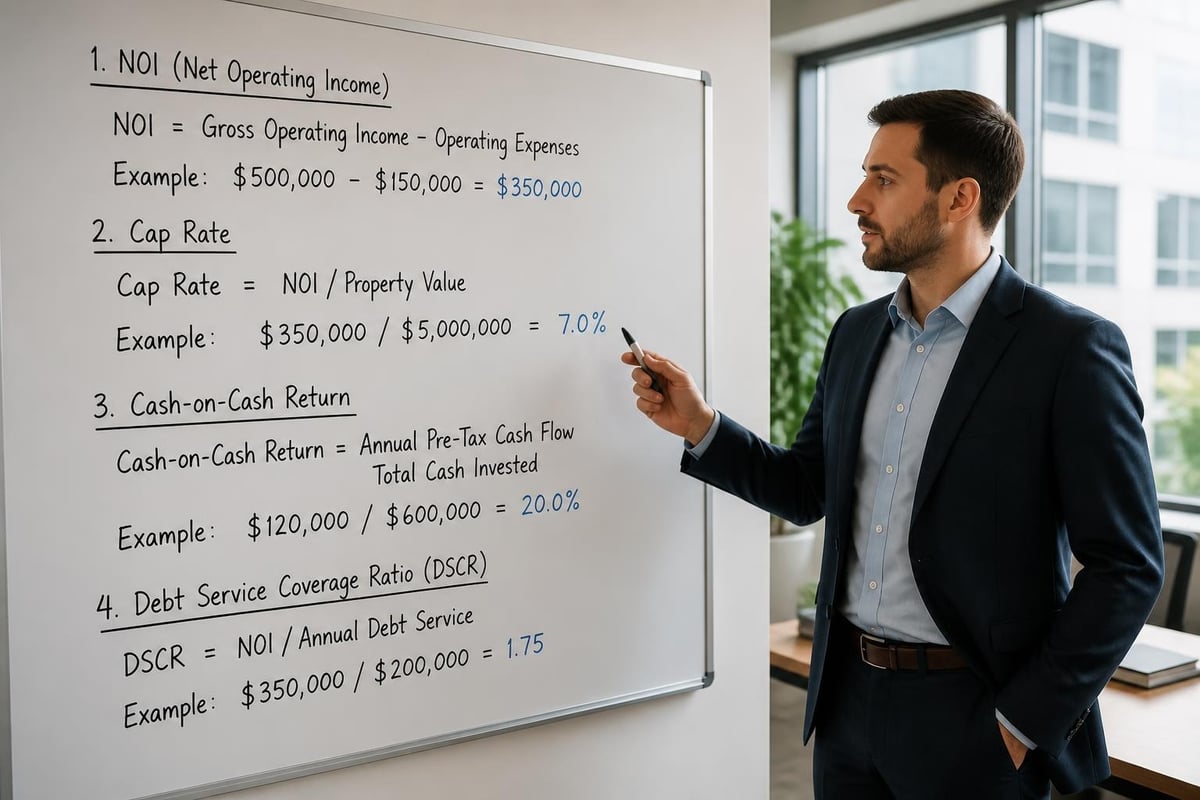
Net Operating Income (NOI)
This is your annual rental income minus operating expenses.
Formula: Total Rent - Operating Expenses = NOI
Operating expenses include:
- Property taxes
- Insurance
- Repairs and maintenance
- Property management fees
- Utilities (if you pay them)
It does NOT include your mortgage payment.
Cap Rate (Capitalization Rate)
This tells you the return on your investment if you paid cash.
Formula: NOI ÷ Purchase Price = Cap Rate
A building with $50,000 NOI that costs $500,000 has a 10% cap rate.
Higher cap rates usually mean higher risk. Lower cap rates mean safer, more stable properties.
Cash-on-Cash Return
This is what most investors actually care about.
It shows your return based on the actual cash you put in.
Formula: Annual Cash Flow ÷ Cash Invested = Cash-on-Cash Return
If you put down $100,000 and get $12,000 a year in cash flow, that's a 12% return.
How to Finance Your First Commercial Deal
Banks treat commercial loans differently than home mortgages.
Expect to put down 20% to 30%. Sometimes more.
Interest rates run higher than residential. Loan terms are usually 5, 10, or 20 years with a balloon payment at the end.
Traditional Bank Loans
Your best bet if you have good credit and financial history.
They'll want to see:
- Personal financial statements
- Tax returns (2-3 years)
- Business plan for the property
- Proof the property generates income
The property needs to show a debt service coverage ratio (DSCR) of at least 1.25. That means it makes 25% more than the loan payment.
SBA Loans
The Small Business Administration backs loans for owner-occupied properties.
You need to use at least 51% of the building for your own business.
Lower down payments (10% to 15%). Better terms.
But the paperwork is insane. Plan for a long process.
Private Lenders and Hard Money
Faster approval. Less red tape. Way higher interest rates.
Good for fix-and-flip commercial deals or when you need to move fast.
Not great for long-term holds. The rates will eat your profits.
Partnerships and Syndications
You don't have to go it alone.
Partner with someone who has experience or money (or both).
Real estate syndications let you invest smaller amounts alongside other investors. Someone else manages the deal.
Finding the Right Property
Location drives everything in commercial real estate.
You want properties near:
- Major highways or transportation
- Growing population centers
- Strong local economies
- Areas with low vacancy rates
Current transaction trends show which markets are hot in 2026.
Do Your Homework
Drive the area. See what businesses are thriving.
Talk to local commercial real estate agents. They know what's coming to market before it hits listings.
Check the tenant mix. Strong, stable tenants matter more than anything.
Look for red flags:
- High vacancy in surrounding buildings
- Declining neighborhood
- Major tenant leaving soon
- Deferred maintenance issues
If something feels off, it probably is.
Due Diligence Before You Buy
Never skip this part. Ever.
You're about to drop serious money. Make sure the deal is solid.
Property Inspection
Hire professionals to check:
- Roof condition
- HVAC systems
- Electrical and plumbing
- Structural integrity
- Environmental issues (asbestos, mold, soil contamination)
Commercial inspections cost more than residential. Worth every penny.
Review All Leases
Read every single lease. Know when they expire.
Understand the terms. Who pays utilities? Who handles repairs?
Some leases are triple net (NNN). The tenant pays taxes, insurance, and maintenance.
Others are gross leases. You pay everything.
Financial Records
Get at least three years of:
- Rent rolls
- Operating expenses
- Tax returns for the property
- Profit and loss statements
Verify the numbers. Some sellers get creative with their math.
Title Search and Survey
Make sure the seller actually owns the property.
Check for liens, easements, or encumbrances.
Get a current survey showing property boundaries.
If you're looking to transition from residential investing or need quick capital for your next commercial deal, HudREI's cash offer program can help you sell residential properties fast to free up funds.
Common Mistakes Beginners Make
You're going to make mistakes. Everyone does.
But avoid these big ones:
Overpaying because you fell in love with a building. This is business, not romance. The numbers have to work.
Underestimating expenses. Always budget more than you think you'll need for repairs and maintenance.
Ignoring vacancy rates. You won't keep 100% occupancy. Plan for empty units.
Skipping professional help. Hire a good commercial real estate attorney and accountant. They'll save you money in the long run.
Not having reserves. Stuff breaks. Tenants leave. You need cash on hand.
Building Your Team
You can't do this alone. You need good people.
Commercial Real Estate Agent
Find someone who specializes in the property type you want.
They know the market, have connections, and can find off-market deals.
Real Estate Attorney
Commercial contracts are complex. One mistake costs thousands.
Get a lawyer who knows commercial real estate inside and out.
Commercial Lender
Build a relationship before you need money.
They can pre-qualify you and move fast when you find a deal.
Property Manager
Unless you want this to be your full-time job, hire management.
They handle tenants, maintenance, rent collection, and emergencies.
Usually costs 6% to 10% of gross rents. Worth it.
Accountant or CPA
Tax rules for commercial real estate get complicated fast.
A good accountant saves you money and keeps you out of trouble.

Market Trends to Watch in 2026
The commercial real estate landscape keeps shifting.
Mid-2026 market outlooks show cautious optimism despite economic uncertainty.
Interest rates matter. When rates drop, property values typically rise.
When rates climb, deals slow down but opportunities appear.
Hot sectors right now:
- Industrial and logistics (thanks to e-commerce)
- Multifamily in growing cities
- Medical office buildings (aging population)
- Self-storage (people have too much stuff)
Cooling sectors:
- Traditional office space (remote work impact)
- Older retail (but experiential retail is growing)
Keep an eye on national transaction trends to spot where money is flowing.
Tax Benefits You Should Know
Commercial real estate offers serious tax advantages.
Talk to your CPA about these:
Depreciation
You can write off the building's value over 39 years.
This creates paper losses that offset your rental income.
You're making money but showing a loss on taxes.
1031 Exchange
Sell one property, buy another, defer all capital gains taxes.
There are strict rules and timelines. But it's powerful for building wealth.
Deductible Expenses
Almost everything related to the property is deductible:
- Mortgage interest
- Property taxes
- Insurance
- Repairs and maintenance
- Property management fees
- Professional fees
- Travel to inspect the property
Keep good records. Every receipt matters.
Starting Small Makes Sense
You don't need millions to get started in commercial real estate for beginners.
Consider these entry points:
Small multifamily properties (5-10 units). Easier to finance than huge complexes. Less intimidating to manage.
Small office buildings. Local professional buildings in good areas can be solid first investments.
Single tenant retail. Think standalone Starbucks or Walgreens with long-term leases. The tenant handles everything.
Partner on a larger deal. Invest with experienced operators. Learn while you earn.
The goal is to get in the game, learn the ropes, and build from there.
What Success Actually Looks Like
Don't expect to get rich overnight.
Commercial real estate builds wealth over time through:
- Steady monthly cash flow
- Mortgage paydown (tenants pay your loan)
- Property appreciation
- Tax advantages
Year one might feel slow. But five years in, you'll have equity, experience, and income.
Ten years in, you might own multiple properties generating serious monthly cash.
That's when commercial real estate for beginners transforms into commercial real estate for pros.
Resources to Keep Learning
Education never stops in this business.
Join local real estate investment groups. Network with other investors.
Step-by-step guides from experienced investors can walk you through your first deal.
Read books on commercial real estate investing. Listen to podcasts.
Attend workshops and seminars. Many are free.
The more you learn, the better deals you'll find and the fewer mistakes you'll make.
Getting Started This Week
Stop overthinking it. Take action.
This week:
- Set your investment criteria (property type, location, budget)
- Contact three commercial real estate agents in your target area
- Drive neighborhoods and look at properties
- Start building your team
- Get pre-qualified with a commercial lender
Next month:
- Look at 10 properties (even if you're not ready to buy)
- Analyze the numbers on each one
- Make an offer on something (practice writing offers)
- Keep learning and networking
The biggest mistake is waiting until you feel "ready." You learn by doing.
Start small. Make smart choices. Build from there.
Commercial real estate for beginners is all about taking that first step with your eyes open. You've got the basics now: understand the property types, know the numbers that matter, build a solid team, and don't skip due diligence. If you're in Indiana and need to free up capital by selling a residential property quickly, HudREI offers fair cash offers within 24 hours with no repairs, fees, or commissions, so you can move forward with your investment goals without the usual selling hassles.