
What Happens If I Don't Pay My Property Taxes in Hamilton County, Indiana?
Behind on property taxes in Hamilton County, Indiana? The penalty the county site will not show until mid December, the December 10 step from 5% to 10%, partial payments, the October 8 tax sale upstairs in the Noblesville courthouse, redemption until October 8, 2027, and your options.
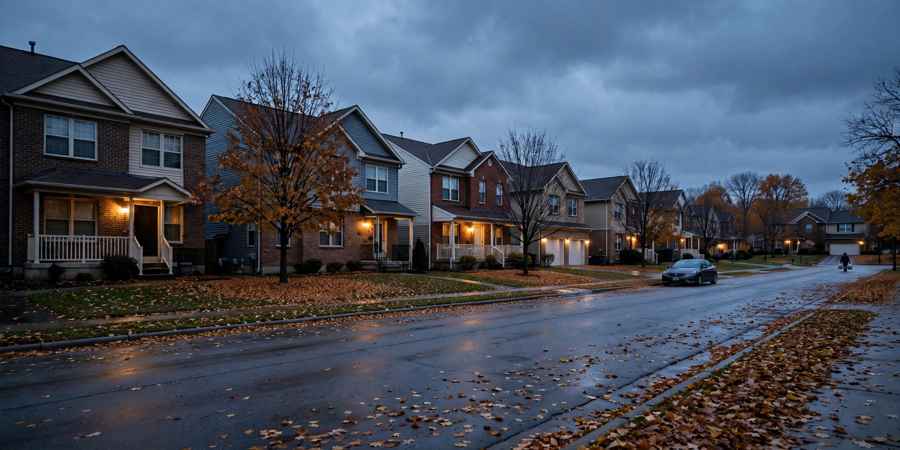
The porch lights come on one by one down a Fishers street.
Dinner is done. The kids are doing homework at the table. And you are standing in your own kitchen, phone in hand, looking at a tax balance on a county screen that feels too calm for the knot in your stomach.
The number looks plain. Almost small. That is the trap in Hamilton County this month, and almost nobody warns you about it. The balance on that screen is not the whole bill right now. A piece of it is not showing yet.
If the fall bill did not get paid by November 10, this page is for you. Not the perfect neighbor with the perfect lawn. You. The one doing quiet math at night and hoping the math changes by morning.
Hamilton County is full of good streets and good schools. Carmel. Fishers. Noblesville. Westfield. Sheridan. People move here on purpose, for the life those names promise. But a good address does not make a bill gentle. Home values here are high, so the tax bill that rides on those values is high too. Two good paychecks can still come up short against it in a thin month. A job change on the north side of Indianapolis. A baby who came early and a hospital bill that came right after. A parent who can no longer live alone, and now lives with you. A marriage that ended, and one income trying to hold a two income house.
None of that is failure. That is life, arriving all at once, the way it tends to do. Falling behind on one bill in a hard season does not erase the years you paid on time. It just means this season needs a plan, not shame.
Here is the plan, in the order this county will actually move.
The balance on your screen is leaving one line out
Start with the dates, because everything else hangs on them.
Hamilton County taxes for 2025, payable in 2026, came due in two parts. Spring was due May 11, 2026. Fall was due November 10, 2026. Both dates are behind us now.
If you pay the fall bill within 30 days after the due date, and you owe no older taxes, the penalty is 5% of the unpaid tax. That window runs to December 10, 2026.
After December 10, the penalty steps up to 10%. And if older taxes on the house are already delinquent, the penalty is 10% from the start. There is no 5% window when an older bill is sitting unpaid under the new one.
Now the part the screen does not tell you.
The county payment site says it in plain words: if you pay after the fall due date, a 5% penalty applies, but that penalty will not be shown on the website until mid December. Read that twice. The balance you see online in late November can look lower than what you truly owe, because the penalty line has not been posted to the page yet.
So do not trust the calm number on the screen. Trust a voice. Call the Treasurer's Office at (317) 776-9620 and ask for your full balance today, penalty counted in. That one call turns a guess into a number you can plan around.
Good streets, big bills, thin months
It helps to say this part out loud, because Hamilton County can make a late bill feel lonelier than it should.
From the road, this county looks like the place where money problems do not live. New roofs in Westfield. Full parking lots in Carmel. Growth in every direction. When your bill goes unpaid in a place that looks like this, it is easy to think you are the only house on the street with a problem.
You are not. You are just the only one who can see your own kitchen at night.
A first full tax bill on a newer build can land far above the estimate you heard at closing. An escrow account that ran short can push a mortgage payment up in the same season the tax bill comes due. Hours get cut in a slow quarter. A car that a family needs for work needs work itself. The bill does not sort these things into fair and unfair. It just sits there, growing a penalty, while life keeps asking for money in five other places.
Naming how you got here matters, because the way out starts with a true story, not a scolding. You got here the way most people do. Something changed, and the bill did not.
Ways in that fit a workday in this county
When you are ready to pay, in full or in part, Hamilton County gives you more doors than most people use. The Treasurer's Office is on the first floor of the Historic Courthouse in downtown Noblesville, at 33 North 9th Street, Suite 112. Hours are 8 in the morning to 4:30 in the afternoon, Monday through Friday.
- Online, any hour. Go to hamiltoncounty.in.gov/taxes and open Property Reports and Payments. An e-check costs $1. A credit or debit card costs 2.5% of the payment. Online payments take 2 to 3 business days to show in the county records, so do not wait for the last day and expect the screen to prove you paid.
- By mail. Make the check payable to the Treasurer of Hamilton County and mail it to Hamilton County Treasurer, 33 North 9th Street, Suite 112, Noblesville, IN 46060. Mail must be postmarked by the due date. The date printed by a postage meter does not count as a postmark.
- In person. The office takes cash, checks, cashier's checks, and money orders. It does not take credit cards at the window. Cards are online only.
- The drop box. There is a collection box at the west doors of the Historic Courthouse. On a deadline day, a payment dropped in by midnight still counts as on time.
- At a local bank. BMO Bank, Community First Bank of Indiana, Farmers Bank, First Farmers Bank, Horizon Bank, Merchants Bank of Indiana, and Star Financial Bank take Hamilton County tax payments. Bring your tax statement with you. Banks are not allowed to take a payment after the official deadline, so this door closes first.
One warning that saves real money: if an online payment is returned for any reason, the county charges a $25 fee, and a returned payment that makes you miss a deadline still takes the late penalty. Pay from an account you know is good.
For the local picture, see how we buy houses in Hamilton County.
Sending part of it still helps, and here is the catch
You do not need the whole amount to make a first move.
Hamilton County accepts partial tax payments, and it accepts advance payments in any amount you wish to pay. Money sent now is real money off the stack. For a family choosing between the full bill and groceries, that door matters.
Here is the catch, and the county prints this one too: partial payments are accepted, but penalties will still be charged on what stays unpaid. A part payment shrinks the bill. It does not pause the clock, and it does not protect the house from a tax sale if the rest stays unpaid long enough.
So treat a partial payment as a start, not a finish. Send what you can. Write down what is left. Then decide, with the true balance from that phone call, how the rest gets handled: paid down month by month, or closed out by a sale of the house itself, on your timing instead of the county's.
October 8 already happened upstairs
Most people picture a tax sale as something far away, in a place they will never see. In Hamilton County, it happens in the same building where you pay.
The 2026 Hamilton County Tax Sale was held on Thursday, October 8, 2026, at 10 in the morning, in the Second Floor Historic Courtroom at 33 North 9th Street in Noblesville, one floor above the Treasurer's Office. The sale was also run as an electronic sale online through SRI, and the sale list was posted through SRI starting in mid August.
To pull a house off that sale list, the county's rule was hard and clear: payment in full to the Treasurer's Office no later than noon on the day before the sale, and the money had to be certified funds. Cash, a cashier's check, or a money order, payable to the Hamilton County Treasurer. No personal check at the last hour. No part payment. Full, certified, and a day early.
If your house had older unpaid taxes and you did nothing before October 8, it may have been offered that morning. That sounds like the end of the story. In Indiana, it is not. But the road back has a date on it, and the next section is the one to read slowly.
And if your house was not in this sale, hear the warning inside the date: a house with taxes left unpaid does not stay off future lists by luck. It stays off by a plan.
A house sold in October still has a way home
Indiana gives the owner one year to redeem a house sold at a tax sale. For a house sold on October 8, 2026, that year runs to October 8, 2027.
Redeeming means paying what the law sets, through the county, so the sale is undone. In the first six months, the amount is 110% of the minimum bid. After six months, and up to the one year mark, it is 115% of the minimum bid. Extra costs the law adds, like taxes paid after the sale, ride on top of that.
Two things follow from those numbers.
First, earlier is cheaper. The jump from 110% to 115% happens at the six month line whether you are ready or not.
Second, the year is real, but it is not a pause button for your life. A house in redemption is a house in limbo. It is hard to sell the normal way, hard to refinance, and heavy to carry. Most owners who redeem do it with a plan already in hand: money coming in, or a sale that pays the redemption and closes the chapter clean.
One more county fact belongs here. If a sale brought in more than what was owed, that extra money is surplus, and the owner must file a claim for it within 3 years after the sale date. Money left unclaimed past that window is money left behind.
If your house went through the October sale, call the Treasurer's Office at (317) 776-9620 and ask what your redemption amount is today. Get the number in writing if you can. Then measure it against October 8, 2027, and be honest about which side of that date your plan lands on.
If keeping the house costs more than leaving it
Sometimes the tax bill is the problem. Sometimes it is just the first bill that tells the truth about a bigger one.
If the taxes, the mortgage, the repairs, and the monthly cost of the house add up to more than your life can carry now, paying this one bill may only buy a short rest before the next one lands. That is not giving up. That is reading the whole page instead of one line.
HudREI has helped 120+ homeowners through hard house problems, and there are two ways we can buy yours.
The Fast Cash Offer is our own cash. We can close in 30 days or less. It fits when the tax clock, or the redemption clock, is the thing pressing on you.
The Max Cash Offer pays a fixed number agreed up front, and it needs 60 to 90 days. Your house is offered on the open market and through our private buyer network. We pay for all the marketing. Your only jobs are keeping the house ready to show and giving fair access for showings. It fits when you have a little time and want the higher number that time can bring.
What we stand on is the close. When we agree to buy, we work to a guaranteed close, and we will tell you plainly which path your house fits and why. Tell us about your house today. We call back within 24 hours to gain clarity, so we can present the best offer and real solutions for your situation.
You have carried this bill quietly long enough. The fall date is past. December 10 has not come yet. October's sale is behind this county, and its redemption year is still open. Every clock in this story is still giving you room to move, if you move now.
Start with the true number. One call to (317) 776-9620. Then choose: pay it down with a plan, redeem it with a date circled, or sell it and let this be the last tax season this house costs you sleep.
This page is general information about how Hamilton County property taxes work. It is not tax advice or legal advice. For advice on your own bill, talk to the Hamilton County Treasurer's Office or a tax professional.
Where to go next
If this is your situation
Start Selling Your House Today
Get a cash offer on your house in Indiana or Tennessee, or call (317) 795-1990.