

How to Sell an Inherited House in Indiana (2026 Guide)
Selling an inherited house in Indiana? Get your step-by-step guide to probate, taxes, and fast-sale options. Sell as-is in 2-3 weeks.
Inheriting a house in Indiana isn't always the gift it seems. You're juggling grief, family decisions, maintenance costs, and property taxes all at once. Maybe the house needs repairs you can't afford. Maybe it's out of state and you just want it sold. Here's the thing: you don't have to keep it, fix it, or spend months listing it. Learning how to sell an inherited house in Indiana means understanding probate, taxes, and your selling options. Let's walk through it step by step so you can move forward fast.
Understanding Indiana Probate Requirements
Probate is the legal process that transfers property ownership from the deceased to you.
In Indiana, not every inherited house goes through probate.
If the property was in a trust or had a transfer-on-death deed, you skip probate entirely. Lucky you.
But most inherited houses do require probate. The court verifies the will, settles debts, and gives you legal authority to sell.
Small Estate vs. Full Probate
Indiana offers two paths depending on estate value:
- Small estate affidavit: For estates under $50,000 (no real property included)
- Supervised probate: Required for most homes worth more than $50,000
- Unsupervised probate: Faster option if all heirs agree and debts are settled
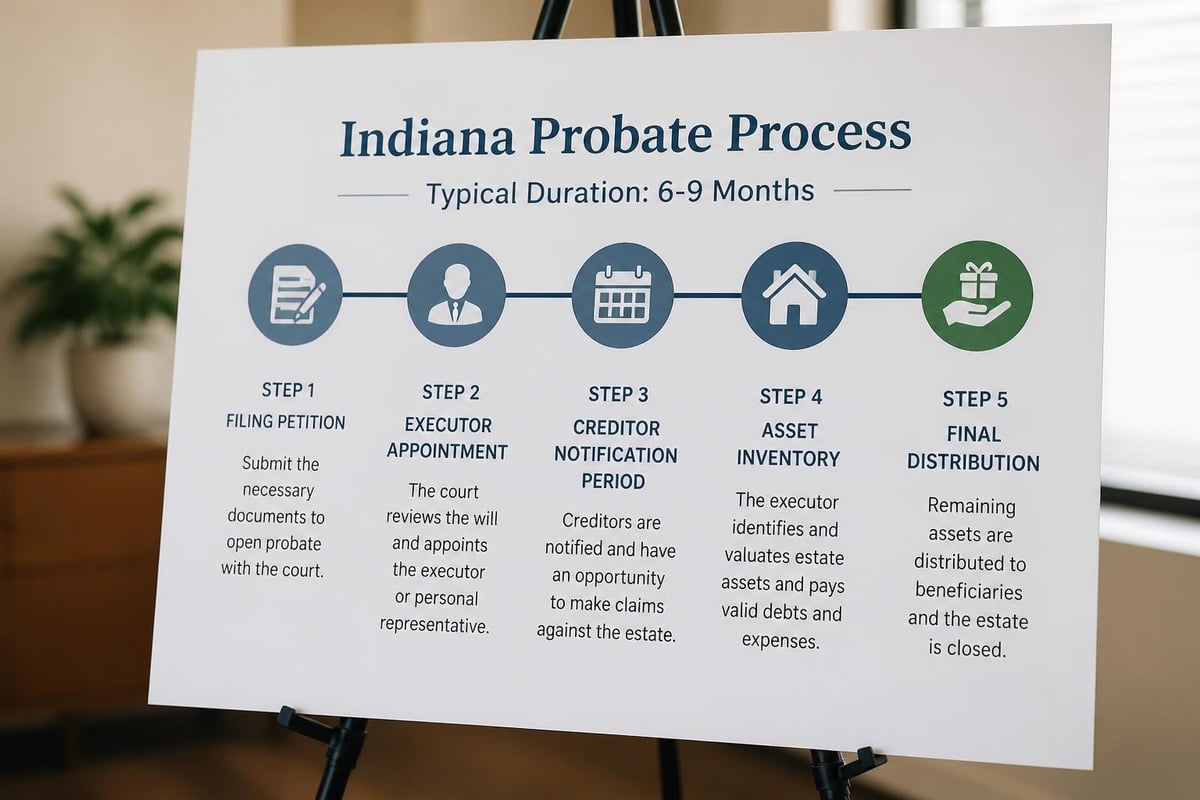
Most inherited houses go through unsupervised probate, which takes 6-9 months on average.
You'll file with the county court where the deceased lived. The court appoints an executor (usually named in the will). That executor gets "letters testamentary" proving legal authority to sell.
You cannot legally sell the house until you have that authority in writing.
What If There's No Will?
If your loved one died intestate (no will), Indiana inheritance laws decide who gets what.
The court appoints an administrator instead of an executor. The process takes longer because the court must determine all legal heirs.
Spouses and children get priority. Then parents, siblings, and other relatives.
This is called intestate succession, and it can get messy with multiple heirs.
| Situation | Who Inherits | Probate Type |
|---|---|---|
| Will exists, one heir | Named beneficiary | Unsupervised |
| Will exists, multiple heirs | All beneficiaries equally | Supervised or unsupervised |
| No will, spouse alive | Spouse (sometimes with children) | Supervised |
| No will, no spouse | Children equally | Supervised |
Dealing with Multiple Heirs
Here's where things get complicated.
If you're not the only heir, everyone has to agree on selling.
One sibling wants to keep the house. Another wants to sell immediately. A third wants to rent it out.
You need unanimous consent from all heirs before listing the property.
Buyout Options
If heirs disagree, someone can buy out the others' shares.
Get the house appraised first. Divide the value by the number of heirs. That's each person's share.
The heir who wants to keep it pays cash to the others. Simple in theory, complicated in practice.
Most families don't have that kind of cash lying around.
Partition Action as Last Resort
When heirs can't agree and no one can buy out the others, you file a partition action.
The court forces the sale and divides proceeds among heirs.
It's expensive, slow, and burns through your inheritance in legal fees. Avoid it if you possibly can.
Better option: agree to sell and split the money. Everyone wins faster.
Clearing the Title and Outstanding Debts
Before you can sell an inherited house in Indiana, the title must be clear.
That means paying off mortgages, liens, and creditor claims first.
Mortgage and HELOC Payoff
If there's still a mortgage, it doesn't disappear when someone dies.
The estate is responsible for paying it off. You have several options:
- Pay off the mortgage from estate funds before selling
- Sell the house and pay the mortgage from sale proceeds
- Assume the mortgage yourself (if you qualify)
Most heirs choose option two: sell and pay at closing.
Home equity lines of credit (HELOCs) work the same way. They must be paid before you pocket any proceeds.
Property Tax and Utility Bills
Indiana property taxes don't pause during probate.
You're responsible for paying them from the date of death until closing. Same with utilities if you're keeping them on.
Factor these ongoing costs into your timeline. The longer you wait to sell, the more you pay.
Creditor Claims Period
Indiana law gives creditors three months to file claims against the estate after you publish notice in the newspaper.
You can't close on the house sale until this period ends and all valid debts are settled.
This is why probate sales take longer than regular sales. You're waiting on legal timelines, not just buyers.
Tax Implications When Selling
Taxes on inherited property work differently than regular home sales.
Good news: you probably won't owe as much as you think.
Step-Up in Basis Explained
When you inherit property, you get a "step-up in basis" to the fair market value on the date of death.
Let's say your mom bought the house for $80,000 in 1995. It's worth $200,000 when she passes in 2026.
Your basis is $200,000, not $80,000.
If you sell for $205,000, you only pay capital gains tax on $5,000 of profit. Not $125,000.
This step-up in basis saves heirs thousands in taxes.
It's one of the few tax breaks the IRS actually gives you.
Indiana Inheritance Tax
Here's more good news: Indiana eliminated its inheritance tax in 2013.
You won't pay state inheritance tax on the property itself.
But you still need to file a federal estate tax return if the total estate exceeds $13.61 million in 2026. Most Indiana estates don't hit that threshold.
Capital Gains on the Sale
You only owe capital gains tax if you sell for more than the stepped-up basis.
If you inherited at $200,000 and sell for $190,000 (after needed repairs), you owe nothing.
In fact, you might be able to deduct the loss. Talk to a tax professional about your specific situation.
For more detailed information, the probate and tax implications can help you navigate closing procedures.

Getting the Property Ready to Sell
Now comes the hard part: deciding how much work to put into the house.
Walk through the property and make a list. What needs fixing? What's outdated? What's broken?
The Repair Dilemma
Most inherited houses need work.
They've been sitting empty during probate. Maybe the previous owner couldn't maintain them in their final years.
You have three choices:
- Fix everything and list at top dollar
- Do cosmetic updates only (paint, cleaning, landscaping)
- Sell as-is and let the buyer handle repairs
Option one costs the most money and time upfront. You might get a higher price, but you'll wait longer and spend thousands first.
Option three is fastest but yields the lowest traditional market price.
As-Is Sale Benefits
Selling as-is means exactly what it sounds like.
No repairs. No updates. No staging.
The buyer accepts the property in current condition. You don't fix a single thing.
This works great if you:
- Live out of state and can't manage contractors
- Don't have cash for repairs
- Just want it sold quickly
- Inherited a house needing major work
Companies like HudREI specialize in buying Indiana houses as-is, which means you can skip repairs entirely and close in as little as 2-3 weeks.
Required Disclosures in Indiana
Indiana requires sellers to disclose known defects.
Even if you're selling as-is, you must tell buyers about problems you're aware of.
Foundation cracks. Roof leaks. Mold. Electrical issues.
Lying on disclosure forms can get you sued after closing. Be honest about what you know.
If you truly don't know the house's condition (you live out of state, the owner lived there alone), state that clearly on the disclosure.
Understanding the legal requirements for selling inherited property in Indiana helps you stay compliant with disclosure laws.
Your Selling Options in Indiana
You don't have just one way to sell an inherited house in Indiana.
Each option has different timelines, costs, and effort levels.
Traditional Real Estate Agent
This is what most people think of first.
Hire an agent. List on MLS. Wait for buyers. Show the house. Negotiate offers. Close in 30-60 days (if all goes well).
Pros:
- Potentially highest sale price
- Agent handles marketing and showings
- Wide buyer pool through MLS
Cons:
- 5-6% commission fees
- House must be show-ready
- Average 60-90 days to close
- Buyers can back out during inspection
- You pay for repairs if inspection reveals issues
This works best if the house is in good condition and you're not in a rush.
For Sale By Owner (FSBO)
Skip the agent and sell it yourself.
You handle marketing, showings, negotiations, and paperwork.
Save the commission but invest serious time and effort. You'll still pay the buyer's agent commission (typically 2.5-3%).
Most FSBO sellers underestimate the work involved. Unless you have real estate experience, this option usually costs you more than it saves.
Cash Buyer Companies
Companies like HudREI buy houses directly for cash.
No listing. No showings. No repairs. No commissions.
You get an offer within 24 hours and can close in 2-3 weeks.
The trade-off: Cash offers are typically 70-85% of retail value. But you save on:
- Commission fees (6%)
- Closing costs (2-3%)
- Repairs and updates (varies widely)
- Carrying costs while it sits on market (1-2% per month)
When you add up those costs, the net difference shrinks considerably.
This option makes sense when:
- The house needs major repairs
- You need to sell quickly
- You live out of state
- Multiple heirs want fast resolution
- You can't afford to front repair costs
HudREI's selling options include their Cash Offer Program that can close in as little as 2-3 weeks, allowing you to skip the traditional listing process entirely.
| Selling Method | Timeline | Your Costs | Best For |
|---|---|---|---|
| Traditional agent | 60-90 days | 6-9% + repairs | Good condition, not urgent |
| FSBO | 60-120 days | 3-5% + repairs | Experience sellers |
| Cash buyer | 2-3 weeks | None | As-is, fast sale needed |
| Auction | 30-45 days | 10-15% | Unique or distressed |
Timeline for Selling an Inherited House
Let's be realistic about how long this takes.
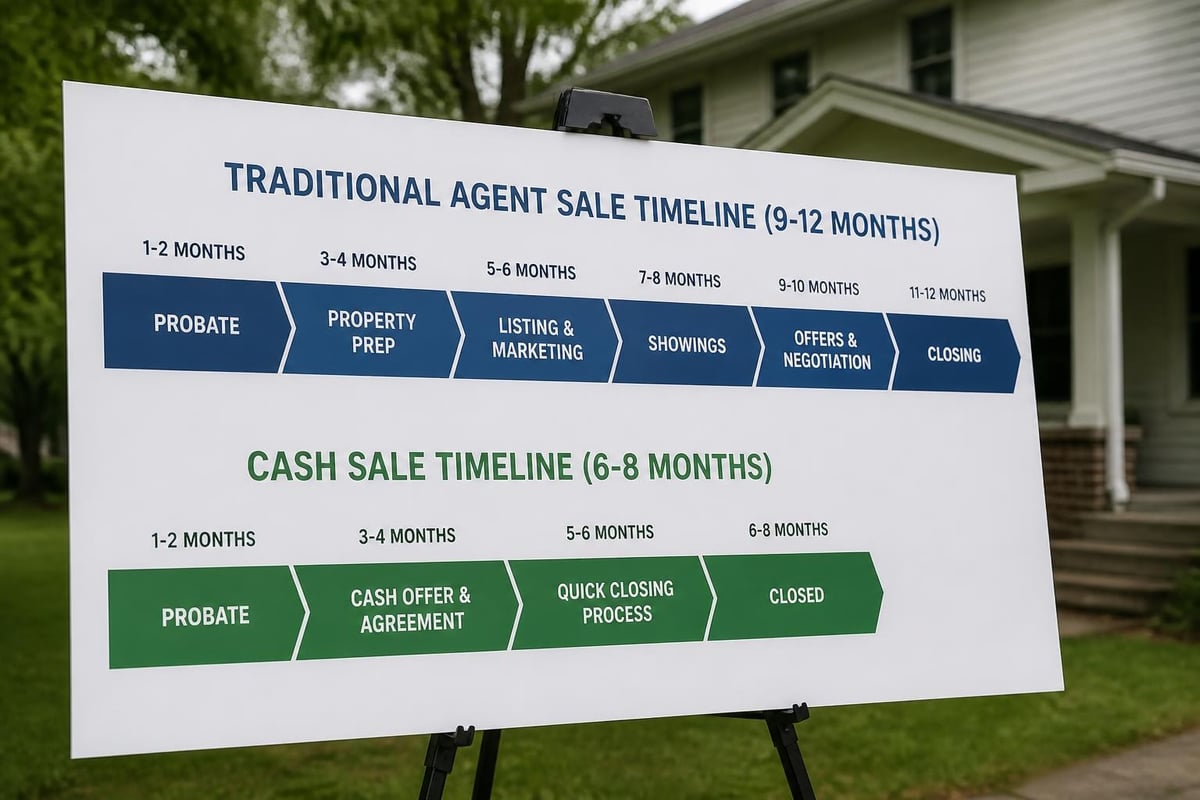
From the date of death to closing day, plan for 9-12 months minimum through traditional sale.
Month 1-2: Probate Filing
File the will with the county probate court. Get appointed as executor. Publish creditor notice.
You can't do anything else until you have legal authority.
Month 3-6: Creditor Period and Property Assessment
Three-month creditor claim period runs. Meanwhile, get the house appraised and decide on your selling strategy.
If multiple heirs are involved, this is when you need to reach agreement on selling.
Month 7-9: Marketing and Sale
List the property or contact cash buyers. Accept an offer. Complete inspections.
Traditional sales add 30-60 days here. Cash sales can happen in 2-3 weeks.
Month 10-12: Closing and Distribution
Close on the sale. Pay off debts and liens. Distribute remaining funds to heirs.
File final probate paperwork with the court.
You can shorten this timeline significantly by choosing a cash buyer during the creditor period and closing immediately when probate completes.
Common Mistakes to Avoid
I've seen heirs make the same mistakes over and over.
Don't let these trip you up.
Mistake 1: Selling Before Probate Completes
You cannot legally sell until the court gives you authority.
Any contract you sign before that is void. Wait for your letters testamentary.
Mistake 2: Ignoring Ongoing Costs
Property taxes, insurance, utilities, and maintenance don't stop during probate.
Budget for these monthly costs. They add up fast on an empty house.
An empty house also attracts vandalism and squatters in some neighborhoods. Keep it secured.
Mistake 3: Overimproving the Property
Don't sink $50,000 into renovations hoping to make it back.
Heirs rarely recoup major renovation costs, especially in inherited properties.
Stick to cleaning, minor repairs, and curb appeal if you're going the traditional route. Or skip it entirely with an as-is sale.
Mistake 4: Letting Emotions Drive Decisions
This was Mom's house. You grew up here. Every room has memories.
But emotional attachment leads to overpricing and refusing reasonable offers.
Price based on comps and current condition, not sentimental value. Buyers don't pay extra for your memories.
Mistake 5: Poor Communication Between Heirs
When multiple siblings or relatives inherit together, communication breakdowns create disasters.
Have clear, documented conversations about:
- Selling timeline
- Price expectations
- Who handles what tasks
- How to split costs and proceeds
Put agreements in writing. Even with family, especially with family.
For additional guidance on navigating the emotional and practical aspects, inheriting a house and deciding what to do with it covers key considerations.
Working with Professionals
You don't have to figure out how to sell an inherited house in Indiana alone.
Assemble a team of professionals to guide you through it.
Probate Attorney
Unless the estate is very simple, hire a probate attorney.
They file paperwork, communicate with the court, and keep you compliant with Indiana law.
Worth every penny to avoid costly mistakes.
Real Estate Agent or Cash Buyer
Choose based on your situation and timeline.
Interview multiple agents if going the traditional route. Look for experience with probate sales and inherited properties.
Or contact a reputable cash buyer for a quick, straightforward offer. Check reviews and verify they're licensed in Indiana.
Tax Professional
Inheritance tax situations get complicated quickly.
A CPA or tax attorney helps you understand basis, capital gains, and deductions.
Don't wing it on tax matters. The IRS doesn't care that you didn't know the rules.
Title Company
A title company ensures the property title is clear and handles closing paperwork.
They'll identify any liens or title issues that need resolving before sale.
Most buyers require title insurance anyway, so you'll work with a title company regardless of selling method.
Whether you're in Indianapolis, Fort Wayne, or anywhere else in Indiana, local professionals understand your county's specific requirements.
Special Situations
Some inherited house scenarios have extra complications.
Out-of-State Heirs
Managing an Indiana property from California or Florida adds difficulty.
You can't easily show the house, meet contractors, or handle emergencies.
Cash buyers solve this problem. Everything happens remotely with digital signatures. You never have to visit the property.
Inherited House with Tenants
If the deceased was renting the property, existing leases usually survive the transfer.
You become the new landlord with all those responsibilities.
In Indiana, you must honor the lease terms. You can sell with tenants in place (investor buyers like this) or wait until the lease ends.
Cash for keys (paying tenants to leave early) is another option if you need them out sooner.
Reverse Mortgage Properties
If the deceased had a reverse mortgage, it becomes due immediately upon death.
Heirs have 30 days to decide: pay off the reverse mortgage and keep the house, or let the lender foreclose.
If you want to sell, you'll need to pay off the reverse mortgage at closing from sale proceeds. Make sure the sale price covers the balance.
Houses in Disrepair or Code Violations
Some inherited houses have been neglected for years.
Code violations, structural damage, or condemned status make traditional sales nearly impossible.
Cash buyers specialize in these exact situations. They buy properties in any condition, even with active code violations.
Selling Strategies by Location
Indiana's real estate market varies by region.
What works in Indianapolis might not work in rural counties.
Urban Markets
Cities like Carmel, Fishers, and Bloomington have strong buyer demand.
Well-maintained inherited houses sell quickly here through traditional listing.
But competition is fierce. Buyers expect move-in ready condition.
Suburban Areas
Suburbs around major cities like Hamilton County offer good traditional and cash buyer options.
Family-oriented buyers look here, so curb appeal and school districts matter.
Rural Properties
Rural inherited houses take longer to sell traditionally.
Smaller buyer pool. More specific property needs. Longer marketing periods.
Cash buyers don't care about location. They buy rural, suburban, and urban properties equally.
If you've inherited property in areas like Lafayette or Muncie, expect different market dynamics than Indianapolis.
Moving Forward with Your Sale
Selling an inherited house in Indiana doesn't have to overwhelm you.
Focus on one step at a time:
Step 1: Secure legal authority through probate Step 2: Assess the property condition and value Step 3: Align all heirs on the selling plan Step 4: Choose your selling method based on timeline and condition Step 5: Close the sale and distribute proceeds
The faster you make decisions, the less you'll spend on carrying costs.
Don't let the house sit empty for months while you debate. Every month costs you money in taxes, insurance, and maintenance.
For a complete overview of the process, explore this step-by-step guide to selling an inherited house that covers legal authority and selling options.
Selling an inherited house in Indiana involves probate, taxes, and tough decisions, but you have options that fit your timeline and budget. Whether you choose a traditional sale or need to sell as-is fast, understanding the process helps you avoid costly mistakes. If you're looking for a quick, hassle-free solution, HudREI provides fair cash offers within 24 hours and can close in as little as 2-3 weeks with no repairs, fees, or commissions required.