
Industrial REITs: Your 2026 Investment Guide Explained
Industrial REITs own warehouses and distribution centers. Here's how they work, what drives returns, and why they matter in 2026.
You've probably heard about REITs before. Real estate investment trusts.
But industrial REITs? They're a specific slice of the real estate pie.
And right now, in 2026, they're getting a lot of attention from investors looking for steady income.
Let me break it down for you. No fluff. Just what you need to know.
What Industrial REITs Actually Own
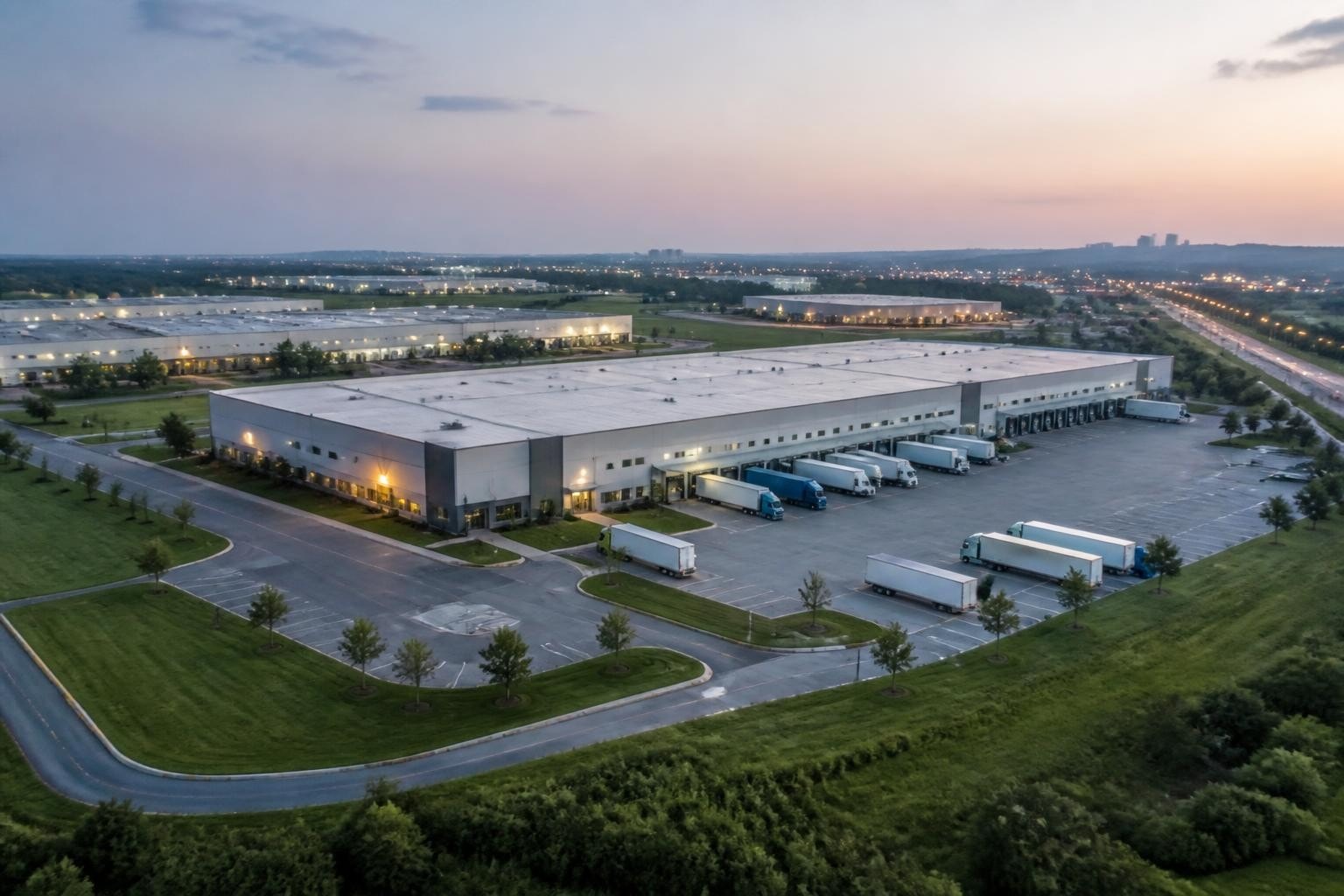
Industrial REITs own big boxes. Warehouses. Distribution centers. Logistics hubs.
Think about the building where Amazon stores stuff before it ships to your door. That's industrial real estate.
These companies buy properties, rent them to tenants like FedEx or Walmart, then pass most of the rental income to you as dividends.
The core business is simple: collect rent, pay investors.
Here's what falls under the industrial REIT umbrella:
- Warehouses for bulk storage
- Distribution centers near major cities
- Last-mile delivery facilities close to consumers
- Flex industrial spaces with office components
- Cold storage for food and pharma
- Manufacturing facilities in some cases
Most industrial REITs focus on e-commerce and rapid delivery because that's where the money is right now.
The business model is straightforward. They don't flip properties. They hold them and lease them out.
Long-term leases mean predictable income. Predictable income means reliable dividends for you.

Why Industrial REITs Took Off
E-commerce changed everything. When people started buying online instead of going to stores, companies needed places to store inventory.
And not just any places. They needed buildings close to customers.
Same-day delivery? You need warehouses near every major city. That's expensive real estate.
Between 2020 and 2024, demand for industrial space went through the roof. Everyone wanted distribution centers.
Industrial REITs were perfectly positioned. They already owned the buildings retailers desperately needed.
Vacancy rates dropped. Rents climbed. Investors made money.
But 2026 looks a bit different. The feeding frenzy cooled down.
E-commerce growth slowed. New warehouse construction caught up with demand. Vacancy rates ticked up in some markets.
That doesn't mean industrial REITs are dead. It means the easy money phase is over.
Now it's about picking the right properties in the right locations with the right tenants.
| Market Factor | 2020-2023 | 2026 Status |
|---|---|---|
| E-commerce growth | Explosive | Steady |
| Vacancy rates | Record lows | Rising slightly |
| New construction | Playing catchup | Matching demand |
| Rent growth | Double-digit | Single-digit |
| Investor sentiment | Euphoric | Cautious optimism |
The fundamentals still work if you understand the current landscape.
How Industrial REITs Make You Money
Two ways: dividends and appreciation. Let's start with dividends.
REITs must pay out 90% of taxable income as dividends. That's the law.
So if an industrial REIT collects $100 million in rent and has $20 million in expenses, they've got $80 million in taxable income.
They have to distribute at least $72 million to shareholders. That's your dividend.
Most industrial REITs pay quarterly. The yields typically range from 2% to 5% depending on the company and market conditions.
Dividends are the main attraction. They're usually higher than what you'd get from stock dividends.
Then there's appreciation. If the properties increase in value, the stock price usually follows.
When tenants sign longer leases at higher rents, the REIT is worth more. When they develop new properties in hot markets, value goes up.
The Tax Angle You Need to Know
REIT dividends are taxed as ordinary income. Not qualified dividends.
That means your regular income tax rate applies. If you're in the 24% bracket, that's what you pay.
One workaround: hold industrial REITs in a retirement account like an IRA or 401(k). Tax-deferred growth. Tax-free distributions if it's a Roth.
- Traditional IRA: Pay taxes when you withdraw
- Roth IRA: Pay nothing if you follow the rules
- Taxable account: Pay every year on dividends
Just like selling real estate requires planning, investing in real estate requires understanding the tax implications.
If you're dealing with actual property decisions in Indiana, HudREI can help you navigate those choices quickly with fair cash offers and no tax surprises at closing.
The Risks Nobody Talks About Enough
Industrial REITs aren't guaranteed money. Let me be straight with you about what can go wrong.
Interest rates hurt REITs. When rates go up, REIT prices usually go down.
Why? Two reasons.
First, higher rates make bonds more attractive. If you can get 5% risk-free from Treasury bonds, why take REIT risk for 3.5%?
Second, REITs borrow money to buy properties. Higher rates mean higher borrowing costs. That eats into profits.
Supply and Demand Issues
Too much construction kills rent growth. In 2026, some markets are overbuilt.
Phoenix. Dallas. Parts of the Midwest. Developers built so many warehouses that vacancy rates jumped.
Empty buildings don't generate rent. No rent means lower dividends.
Location matters more than ever. Not all industrial markets are equal.
Some REITs own prime real estate near ports and population centers. Others own buildings in secondary markets that looked good three years ago but aren't aging well.
Tenant Risk
What happens when a major tenant goes bankrupt or doesn't renew?
If Amazon represents 20% of a REIT's rental income and decides to leave, that's a massive hit.
Good industrial REITs diversify tenants. Bad ones are too concentrated.
Check the tenant list before you invest. Look for:
- Creditworthy companies
- Long-term leases
- Diverse industries
- Staggered expiration dates

What to Look for in Industrial REITs
Not all industrial REITs are created equal. Here's how to separate winners from losers.
Start with location. Prime industrial real estate sits near:
- Major ports (Long Beach, Savannah, Newark)
- Interstate highways
- Large metro areas
- Airports with cargo facilities
Proximity to consumers drives rental demand. The closer to population centers, the better.
Next, check the lease structure. Are leases long-term or short-term?
Long-term leases (5-10 years) provide stability. Short-term leases (1-3 years) allow for faster rent increases in hot markets.
The best REITs balance both.
Financial Health Metrics
Look at these numbers before investing:
| Metric | What It Means | Good Range |
|---|---|---|
| Occupancy Rate | Percentage of space leased | 90%+ |
| Debt-to-Equity | How leveraged the REIT is | Under 50% |
| FFO Growth | Funds from operations trend | Positive 3-year trend |
| Dividend Payout Ratio | Dividends vs. FFO | 70-85% |
| Same-Store NOI | Revenue from existing properties | Growing annually |
FFO stands for Funds From Operations. It's how you measure REIT profitability.
Ignore traditional earnings. REITs depreciate properties on paper, which distorts net income.
FFO adjusts for that. It's the real cash the REIT generates.
Management Matters
Who's running the show? Look for experienced teams with track records.
How do they allocate capital? Do they buy smart or chase trends?
Check their development pipeline. Are they building new properties that make sense, or overextending?
Industrial REITs with solid operations and strong balance sheets weather downturns better than overleveraged competitors.
Read the quarterly earnings calls. Listen to how management talks about challenges.
If they're honest about headwinds, that's good. If everything's always perfect, be skeptical.
Major Players in the Industrial REIT Space
You've got a few dominant names in industrial REITs. Let me give you the rundown.
Prologis is the giant. Biggest industrial REIT in the world.
They own over a billion square feet of space across the globe. Mostly in the U.S. and Europe.
Blue-chip tenants. Prime locations. Strong balance sheet.
Duke Realty merged with Prologis in 2022, making the combined entity even larger.
Americold Realty Trust focuses on cold storage. Temperature-controlled warehouses for food and pharmaceuticals.
Different niche, same industrial category. They benefit from grocery delivery and biotech growth.
Mid-Tier Options
Not everyone wants to invest in the biggest names. Mid-size industrial REITs offer opportunities too.
- EastGroup Properties: Southeastern U.S. focus
- STAG Industrial: Diversified single-tenant properties
- Terreno Realty: Coastal markets, smaller footprint
These companies often trade at better valuations than the mega-caps.
But they carry more risk. Less diversification. More exposure to regional downturns.
Do your homework. Read their 10-K filings. Understand their strategies.
Some investors prefer broad exposure through ETFs that hold multiple industrial REITs.
That spreads risk across companies and markets. Less upside if one REIT crushes it, but less downside if one implodes.
How Industrial REITs Fit Your Portfolio
Let's talk practical allocation. Where do industrial REITs belong in your investment mix?
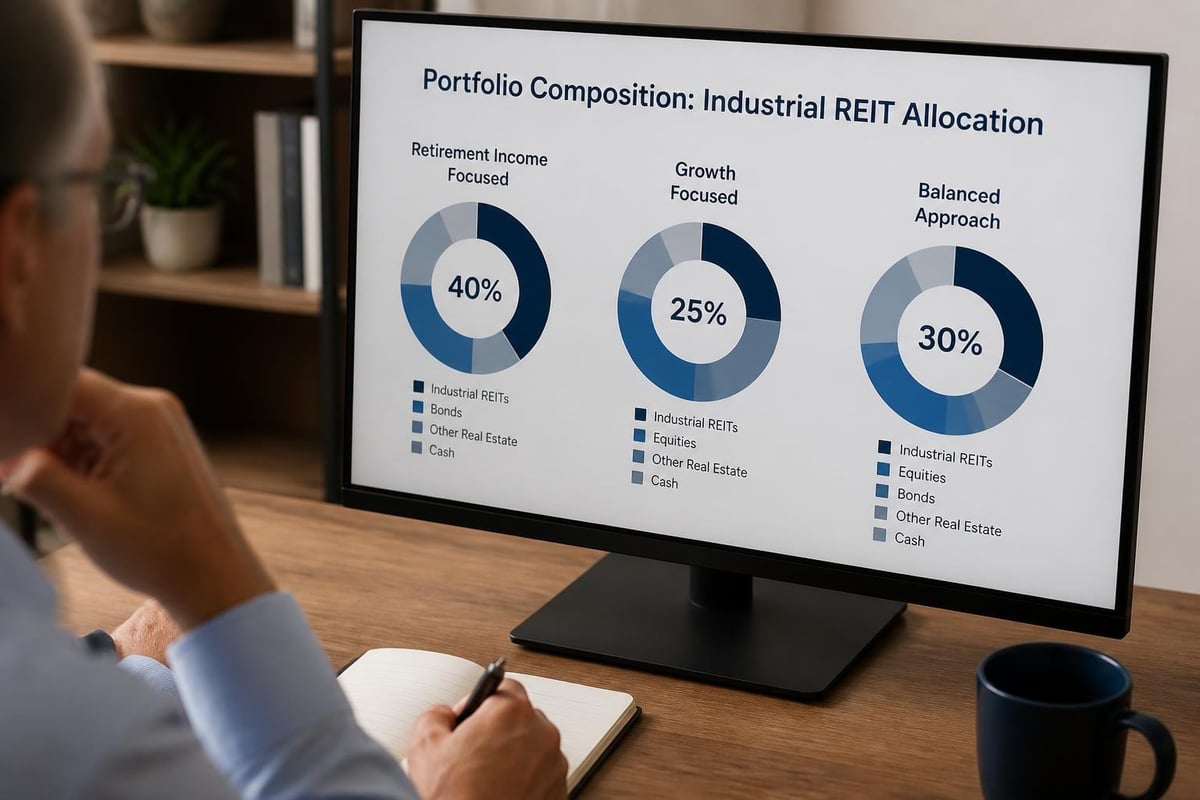
Most financial advisors suggest 5-15% of your portfolio in real estate. That includes REITs.
Within that bucket, industrial REITs might be 25-50% depending on your outlook.
Don't go all-in on one sector. Diversify across industrial, residential, retail, and office REITs.
Or combine REIT exposure with direct real estate ownership if you're into that.
Income vs. Growth Focus
If you're retired and need income, industrial REITs with high dividend yields make sense.
Look for established companies with long track records of steady payouts.
If you're younger and building wealth, focus on growth-oriented industrial REITs.
These might pay lower dividends now but have aggressive development pipelines in high-growth markets.
They reinvest more cash into new properties instead of distributing everything to shareholders.
Consider your timeline. REITs can be volatile short-term.
Over 5-10 years, the dividend income and appreciation usually smooth out the bumps.
| Investment Goal | REIT Type | Dividend Yield | Growth Potential |
|---|---|---|---|
| Retirement income | Established blue-chip | 3-5% | Moderate |
| Wealth building | Growth-focused | 2-3% | Higher |
| Balanced approach | Diversified portfolio | 3-4% | Moderate |
If you're in Indiana and need to free up capital for investments like industrial REITs, selling a property quickly can help. Explore options for fast home sales to access cash without the typical delays of traditional listings.
The 2026 Outlook for Industrial REITs
Let's talk about where things stand right now. No crystal ball, but we can read the tea leaves.
E-commerce isn't going away. People still buy online. That creates ongoing demand for warehouse space.
But the explosive growth of 2020-2023 is behind us. Expect steady, not spectacular, expansion.
Rent growth is moderating. Double-digit increases? Probably not. Single-digit gains? More realistic.
Vacancy rates are stabilizing after hitting historic lows. Some markets are softening. Others remain tight.
The key question is supply. How much new construction hits the market in 2026 and beyond?
If developers pull back, existing industrial REITs benefit. Less competition for tenants.
If construction continues at current pace, occupancy could slip further.
Interest Rate Environment
The Fed's rate decisions matter enormously. In 2026, rates are expected to stabilize or decline slightly from 2025 peaks.
That's good news for industrial REITs. Lower borrowing costs improve profitability.
And if yields on bonds drop, REITs become more attractive for income-seeking investors.
Watch the 10-year Treasury. When it moves, REIT prices usually move too.
Industrial REITs are positioned for growth once policy uncertainty clears according to industry analysts tracking market conditions.
Opportunities in Secondary Markets
Everyone talks about coastal logistics hubs. But secondary markets offer value.
Indianapolis. Louisville. Cincinnati. These Midwest cities have strong logistics networks and lower costs.
Industrial REITs focused on these areas might offer better risk-reward profiles than overpriced coastal properties.
Just make sure the fundamentals support the investment. Population growth. Business activity. Transportation infrastructure.
Don't chase cheap real estate in dying markets. That's a trap.
Common Mistakes Investors Make
Let me save you some headaches. Here's what trips people up with industrial REITs.
Chasing high yields. If a REIT yields 8% when competitors yield 3%, something's wrong.
Maybe they're struggling to lease space. Maybe they're overleveraged. Maybe they're cutting dividends soon.
High yield often signals high risk. Don't get seduced.
Ignoring the Fundamentals
People buy industrial REITs because they read a headline about e-commerce growth.
Then they don't look at the actual properties. The locations. The tenants. The financials.
You're investing in real estate companies. Treat it seriously.
Would you buy a house without an inspection? Don't buy a REIT without due diligence.
Panic Selling
REIT prices fluctuate. Sometimes a lot. When interest rates spike, REITs can drop 20-30%.
New investors panic and sell. Then they lock in losses right before the recovery.
If the fundamentals haven't changed, volatility is noise. Collect your dividends and wait it out.
Unless the business model is broken, temporary price drops are buying opportunities, not sell signals.
Concentration Risk
Some investors fall in love with one industrial REIT and put everything into it.
What happens if that company makes a bad acquisition? Or a major tenant leaves?
Your whole position tanks. Diversification isn't exciting, but it protects you.
Spread investments across multiple REITs. Different geographies. Different strategies.
Tax-Efficient Ways to Hold Industrial REITs
Let's circle back to taxes because this matters for your returns.
In a taxable brokerage account, you'll pay ordinary income tax on dividends every year.
That can eat into your gains, especially if you're in a high tax bracket.
Retirement accounts shelter you from annual taxes. Hold industrial REITs in IRAs or 401(k)s when possible.
If your 401(k) doesn't offer REIT options, use an IRA. Most brokers let you buy individual REITs or REIT ETFs.
Tax-Loss Harvesting
If you hold REITs in taxable accounts, use tax-loss harvesting to offset gains.
When a REIT position drops, sell it to realize the loss. Use that loss to offset capital gains from other investments.
Then buy a similar (but not identical) REIT to maintain exposure. Wait 31 days to avoid wash sale rules if you want to rebuy the same one.
This strategy reduces your tax bill without changing your overall allocation.
Qualified Opportunity Zones
Some industrial REITs invest in Opportunity Zones. These offer tax benefits if you roll capital gains into them.
You can defer taxes on the gain and potentially reduce it if you hold long enough.
Check if the REIT qualifies. Read the fine print. The rules are complex.
Just like managing investment taxes requires strategy, selling real estate in Indiana benefits from understanding local market dynamics. HudREI works across Indiana counties to provide fair, fast cash offers that simplify the selling process.
How to Buy Industrial REITs
Ready to invest? Here's how to actually buy industrial REITs.
Most industrial REITs trade on major stock exchanges. NYSE or NASDAQ.
You buy them like stocks through any brokerage account. Fidelity. Schwab. Vanguard. Robinhood. Whatever you use.
Search the ticker symbol. Place your order. Done.
No special accounts needed. No minimum investments beyond the share price.
Individual REITs vs. ETFs
You can buy individual industrial REIT stocks. Pick specific companies you believe in.
This gives you control. You choose exactly what you own.
But it requires more research. You need to evaluate each company.
Alternatively, buy an industrial REIT ETF. These funds own baskets of industrial REITs.
One purchase gets you diversification across 20-30 companies. Less research required.
Examples include:
- Industrial Real Estate ETFs: Focused on warehouse and logistics properties
- Broad REIT ETFs: Include industrial plus other property types
- Dividend-focused REIT ETFs: Target high-yielding REITs across sectors
ETFs charge expense ratios, usually 0.3-0.6% annually. Small price for built-in diversification.
Dollar-Cost Averaging
Don't dump all your money in at once. REIT prices fluctuate.
Set up automatic monthly purchases. Buy the same dollar amount regardless of price.
When prices are high, you buy fewer shares. When prices drop, you buy more.
Over time, this averages out your cost basis and reduces timing risk.
Steady investing beats trying to time the market.
Industrial REITs offer a way to access warehouse and logistics real estate without buying physical properties. The dividend income and long-term appreciation potential make them worth considering as part of a diversified portfolio in 2026. If you're in Indiana and need to quickly convert property to cash for investment opportunities, HudREI provides fair offers within 24 hours with no repairs or commissions, letting you close in as little as 2-3 weeks and put that capital to work.