
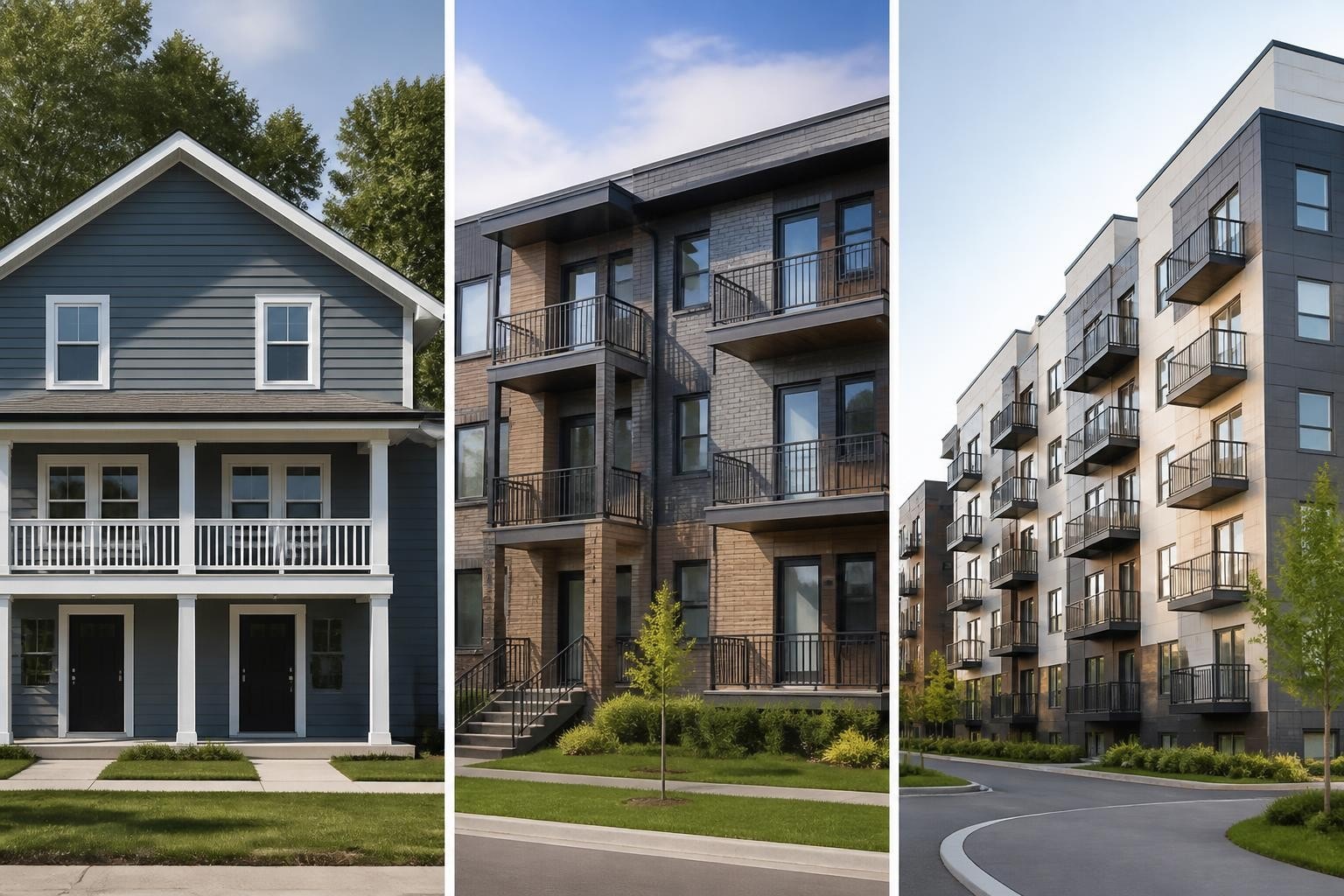
Multifamily Investment Properties: Your 2026 Guide
Thinking about multifamily investment properties? Learn what works in 2026, from duplexes to apartments, plus how to start without the hassle.
You're thinking about jumping into multifamily investment properties. Smart move.
More units mean more rent checks. One roof, multiple income streams.
But where do you start? What actually works in 2026? And how do you avoid the traps that eat your profits?
Let's break it down.
What Counts as Multifamily Investment Properties
Not all rental properties are created equal.
Multifamily means 2+ units in one building. That's it.
The Basic Categories
Here's what you're looking at:
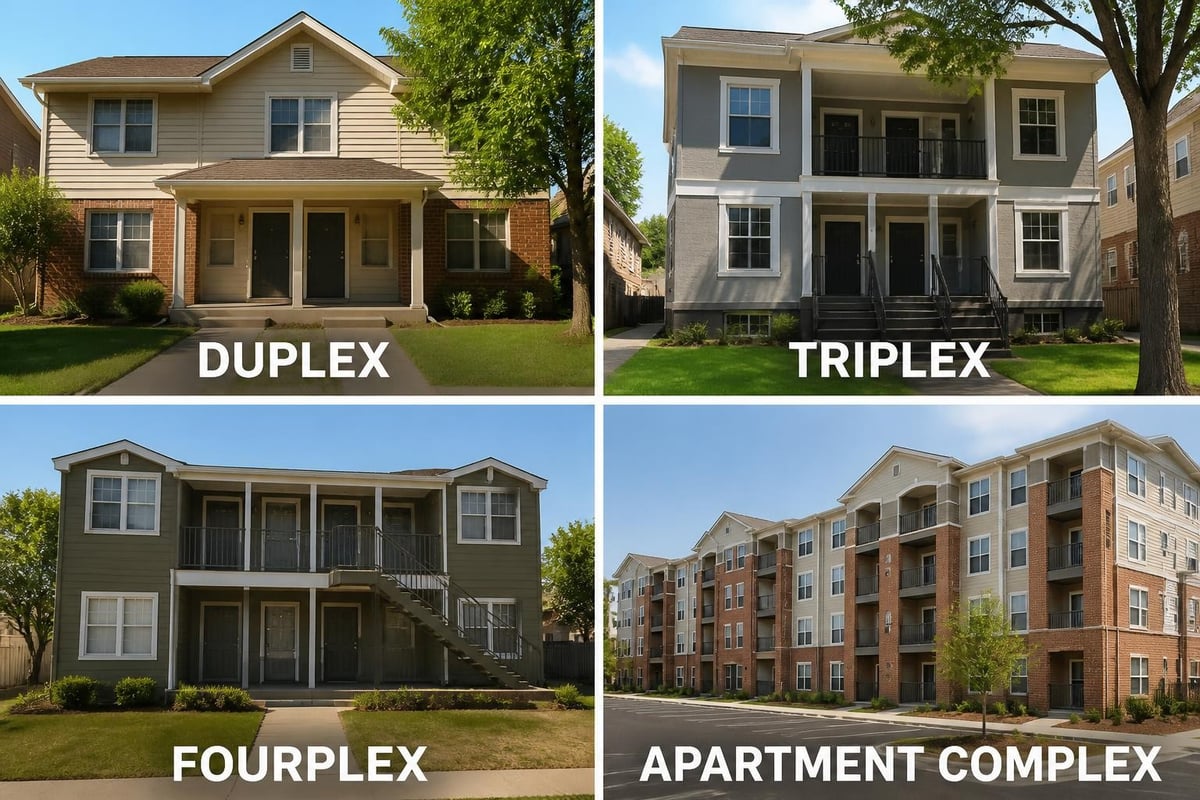
- Duplex: Two units, one building
- Triplex: Three units under one roof
- Fourplex: Four units, still residential financing
- Apartment buildings: 5+ units, commercial territory
Small multifamily (2-4 units) is where most investors start. You can still get regular mortgages. The financing works like buying a house.
Five units or more changes everything. You're in commercial real estate now. Different loans, different rules, different game entirely.
| Property Type | Units | Financing Type | Typical Down Payment |
|---|---|---|---|
| Duplex | 2 | Residential | 15-25% |
| Triplex | 3 | Residential | 15-25% |
| Fourplex | 4 | Residential | 15-25% |
| 5+ Units | 5+ | Commercial | 20-30% |
Why Size Matters
Two-to-four unit properties are easier to buy. Banks treat them like houses.
Live in one unit, rent the others. That's called house hacking. Your tenants cover your mortgage while you build equity.
Once you hit five units, you need commercial financing. Harder to qualify. Bigger down payments. But also bigger cash flow if you do it right.
Why Investors Love Multifamily Investment Properties
One word: efficiency.
You manage one building instead of three scattered houses. One roof to fix. One yard to maintain. One property tax bill.
The Cash Flow Advantage
More doors mean more rent coming in every month.
Lose a tenant in a single-family house? You're at zero income until you fill it. Lose one tenant in a fourplex? You still have 75% of your rent.
That's stability. That's sleep-at-night money.
- Multiple income sources reduce your risk
- Economies of scale cut your per-unit costs
- Professional management becomes affordable at scale
- Forced appreciation through renovations and better management
You can also increase value faster with multifamily investment properties. Improve the property, raise rents, and the building's worth shoots up. Single-family homes don't work that way.
The Indiana Opportunity
Indiana markets like Indianapolis and Fort Wayne offer solid multifamily opportunities. Lower entry prices than coastal markets. Strong rental demand. Growing job markets.
You don't need millions to start. You need the right property in the right neighborhood.
How to Find the Right Multifamily Property
Location isn't everything. It's the only thing.
Buy in a neighborhood where people actually want to live. Not where you hope they'll want to live someday.
What to Look For
Check these boxes before you even think about making an offer:
- Job growth in the area
- Low vacancy rates (under 5% is golden)
- Decent schools nearby
- Public transportation access
- Safety and walkability
Visit at different times. Morning, evening, weekend. Talk to people who live there.
The numbers might look perfect on paper. But if the neighborhood feels sketchy at 8pm, your tenants will notice too.
Running the Numbers
Here's what matters:
| Metric | What It Tells You | Good Target |
|---|---|---|
| Cap Rate | Annual return on investment | 6-10% |
| Cash-on-Cash Return | Cash flow vs. cash invested | 8-12% |
| Debt Service Coverage | Income vs. mortgage payment | 1.25+ |
| Gross Rent Multiplier | Price vs. annual rent | Under 10 |
Don't buy on emotion. Buy on math.
Your cash flow should cover the mortgage, taxes, insurance, maintenance, and still put money in your pocket. If it doesn't, walk away.

Financing Multifamily Investment Properties
Getting the money is half the battle.
Two-to-four units qualify for conventional loans. Same process as buying a house.
Your Financing Options
Here's what's available in 2026:
- Conventional mortgages for 2-4 units (owner-occupied or investment)
- FHA loans if you'll live in one unit (3.5% down)
- Portfolio loans from local banks
- Commercial loans for 5+ units
- Hard money for fix-and-flip projects
Live in one unit and you can use FHA financing. Seriously. 3.5% down on a fourplex if you live there. That's how you start with almost nothing.
Investment property loans require bigger down payments. Usually 20-25%. Your credit needs to be solid. Your debt-to-income ratio matters.
What Lenders Want to See
Banks look at the property's income potential, not just your paycheck.
The building has to support itself. They'll verify current rents. Review lease agreements. Calculate the debt service coverage ratio.
If you're buying a property that needs work, traditional lenders get nervous. That's when you consider hard money or private financing. Higher rates, shorter terms, but they'll fund deals banks won't touch.
Some investors in Hamilton County use cash offers to buy distressed multifamily properties, renovate them, then refinance with conventional loans. If you're looking to sell a property quickly to access capital for your next investment, cash buyers can close in weeks, not months.
Managing Multifamily Investment Properties
This is where dreams die or fortunes get built.
Good management = good returns. Bad management = constant headaches and empty units.
DIY or Hire Help?
You can manage it yourself if you've got time and patience. Screen tenants. Handle repairs. Collect rent. Deal with 2am emergency calls.
Or hire a property manager. They'll charge 8-10% of monthly rent. Worth it once you hit 5+ units.
| Management Option | Best For | Pros | Cons |
|---|---|---|---|
| Self-manage | 2-4 units, local owner | Keep all profits, full control | Time-intensive, steep learning curve |
| Property manager | 5+ units, out-of-state | Professional, scalable | Costs 8-10%, less control |
| Hybrid | Mid-size portfolios | Balance of both | Requires clear boundaries |
Keeping Units Filled
Vacancy kills your cash flow faster than anything else.
Screen tenants hard. Background checks, credit reports, previous landlord references. Spend the money upfront. It's cheaper than evicting someone later.
- Price competitively based on actual market rates
- Keep units in good shape so people want to stay
- Respond fast to maintenance requests
- Renew leases before they expire
Happy tenants stay longer. Lower turnover means lower costs.
Common Mistakes That Cost You Money
Let's talk about what not to do.
Overestimating Rents
You looked at asking prices online and assumed that's what you'll get. Wrong.
Asking isn't getting. Check what properties actually rent for, not what landlords hope they'll rent for. Talk to property managers. Drive the neighborhood.
Factor in vacancy. Budget for at least one month vacant per year per unit. More in soft markets.
Underestimating Expenses
Your mortgage isn't your only cost.
Add up property taxes, insurance, maintenance, management fees, utilities you cover, capital improvements, and the random stuff that breaks.
A good rule: budget 50% of rent for expenses. If you collect $4,000/month, expect $2,000 to go to costs other than your mortgage.
Skipping Inspections
You wanted to save $500 on the inspection. Now you're looking at a $15,000 roof replacement you didn't know about.
Always inspect. Period.
Multifamily properties take more beating than single-family homes. More people means more wear and tear. More systems to fail. More things to break.

The Reality of Returns
What can you actually make with multifamily investment properties?
It depends. On the market. On your financing. On how well you manage it.
Realistic Expectations
Don't believe the get-rich-quick gurus. You're not retiring in three years on two duplexes.
But you can build real wealth over time. Here's how:
- Cash flow: Monthly income after all expenses
- Appreciation: Property value increases over time
- Loan paydown: Tenants pay your mortgage
- Tax benefits: Depreciation and deductions
The magic happens when all four work together. You might only cash flow $200/month per unit. But you're also building equity, getting tax breaks, and hopefully seeing the property appreciate.
Patient money wins in real estate. Quick flips are gambling. Buy-and-hold builds empires.
When to Sell vs. Hold
Sometimes selling makes sense. Values skyrocket. The neighborhood turns. Your strategy changes.
Other times, you hold forever. Strong cash flow. Good tenants. No reason to sell and trigger taxes.
Understanding your options helps you make better decisions. Markets change. Your goals change. Stay flexible.
Getting Started in 2026
You don't need to buy a 50-unit apartment complex tomorrow.
Start small. Get your feet wet with a duplex or triplex.
Your First Steps
Here's the playbook:
- Save your down payment (15-25% of purchase price)
- Get pre-approved so you know your budget
- Pick your market based on research, not hunches
- Run the numbers on every property before making offers
- Build your team (agent, lender, inspector, maybe property manager)
Don't wait for perfect. There's no perfect deal. There's only good deals you can execute on.
Resources Worth Your Time
Education is cheaper than mistakes. Way cheaper.
Forbes offers solid guidance on how to approach multifamily investments strategically. CrowdStreet breaks down what you need to know before diving in.
The Library of Congress resource guide provides industry associations and research materials worth exploring.
Talk to investors who've already done it. Join local real estate groups. Ask questions. Learn from other people's expensive lessons instead of making your own.
Why Multifamily Beats Single-Family
Here's the truth: single-family rentals are more work per dollar earned.
Three houses in three neighborhoods mean three roofs, three yards, three tax bills, three times the driving around.
One triplex? Same three units. One address. One set of systems to maintain.
The Scalability Factor
You can't efficiently manage 20 single-family houses scattered across town. You can manage a 20-unit building.
Bigger buildings attract professional property managers. Professional managers mean less of your time. Less time means you can scale faster.
Time is the real wealth. Not just the cash flow.
Market Resilience
Multifamily investment properties held up better than single-family during economic downturns. People always need housing. When they can't buy, they rent.
During recessions, rental demand often increases. Your multifamily property becomes more valuable when people need affordable housing options.
Special Situations That Create Opportunities
Sometimes the best deals come from complicated situations.
Inherited properties. Divorces. Foreclosures. Owners who just need out fast.
These properties often sell below market value. The owner's priority is speed and certainty, not top dollar.
If you're on the other side and need to sell a multifamily property quickly in Indiana, HudREI can help. Maybe you inherited a duplex you don't want to manage. Maybe you're relocating and can't handle being a long-distance landlord.
Getting a fair cash offer within 24 hours beats letting a property sit vacant for months. No repairs, no fees, no commissions. Close in 2-3 weeks and move on with your life.
Value-Add Opportunities
The best returns often come from properties that need work.
Not gut renovations. Just updates that justify higher rents. New appliances. Fresh paint. Better landscaping. Basic improvements that make units more appealing.
Buy ugly, sell pretty. Or in this case, buy ugly and rent pretty.
You force appreciation by improving the property. Raise rents. Increase the property's net operating income. Watch the value climb.
The Bottom Line on Multifamily Investment Properties
Multiple units mean multiple income streams.
One building to manage instead of several scattered properties. Better cash flow stability. Easier to scale. More professional management options as you grow.
The numbers have to work. The location has to be solid. Your financing needs to make sense. And you need a plan for management.
Start small, learn fast, and scale smart. That's how you build a real portfolio that generates actual wealth.
Markets like South Bend and Evansville still offer entry points that don't require coastal-market money.
You won't get rich overnight. But in 10 years? You'll be glad you started today instead of waiting for perfect timing that never comes.
Multifamily investment properties offer stability, cash flow, and growth potential when you choose the right buildings in the right markets. If you're a property owner in Indiana looking to transition your investment strategy or need to sell quickly for any reason, HudREI provides fair cash offers within 24 hours with no repairs or fees required. You can close in as little as 2-3 weeks and move forward with your next opportunity. Whether you're scaling up or cashing out, we make the process straightforward.