

One Real Estate Investment That Could Change Your Future
Making one real estate investment the right way can set you up for years. Here's what Indiana homeowners need to know before they buy.
You've heard it a million times. Real estate builds wealth. Everyone says it, but nobody tells you the whole story about making just one real estate investment work for you. Here's the thing: you don't need a massive portfolio to win. One good property, bought right and managed smart, can change your financial future. Let's talk about how to make that happen in Indiana without losing your shirt.
Why One Real Estate Investment Beats Doing Nothing
Most people overthink it.
They wait for the perfect moment. The perfect property. The perfect market.
Meanwhile, inflation eats their savings. Rent prices climb every year.
One real estate investment gets you in the game. That's what matters.
You start building equity while your neighbors keep writing rent checks. Your property value grows while theirs stays at zero.
Think about it this way:
- Every mortgage payment builds ownership
- Property values tend to rise over time
- You get tax benefits renters never see
- Leverage lets you control a $200K asset with $40K down
Indiana makes this easier than coastal markets. Home prices here stay reasonable. You're not competing with hedge funds and foreign buyers like in Miami or San Francisco.
The Cash Flow Reality
Here's what nobody tells you about making one real estate investment.
Cash flow takes time.
Your first property probably won't make you rich next month. That's okay.
You're playing a different game. You're building something that compounds.
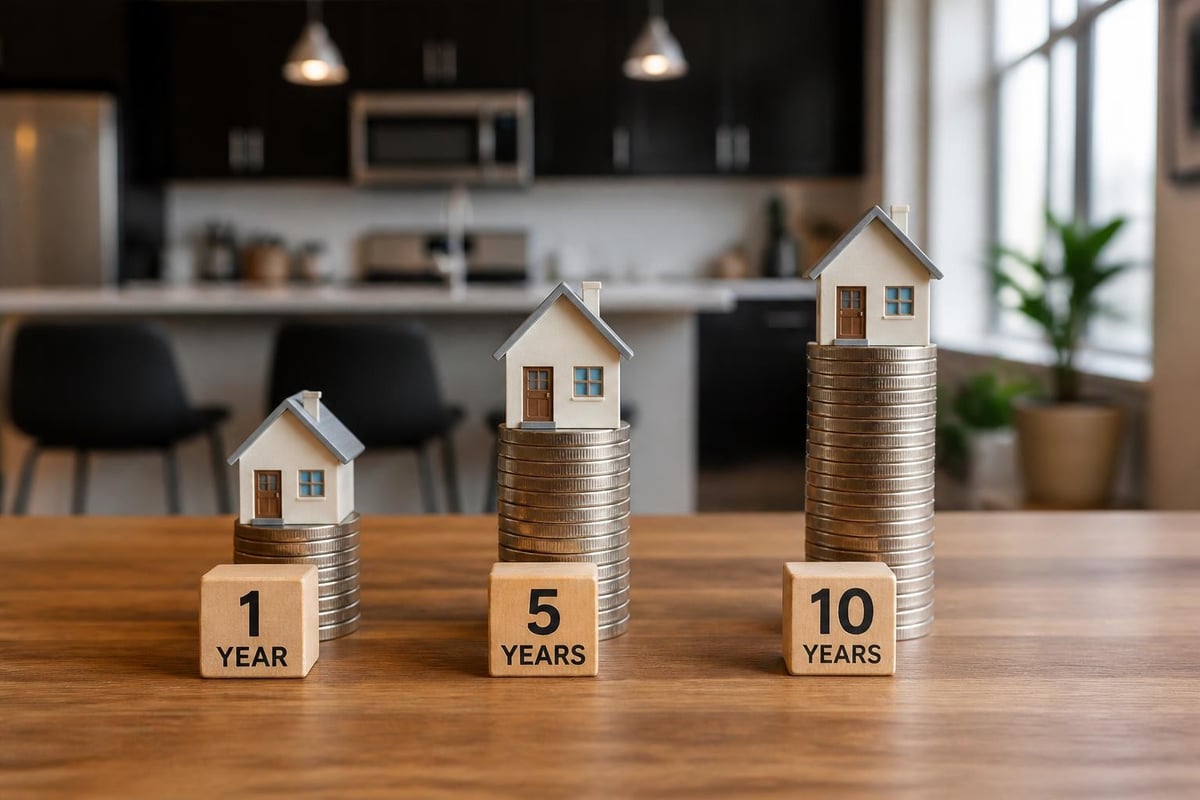
| Year | Equity Built | Property Value | Your Net Worth Gain |
|---|---|---|---|
| 1 | $8,500 | $210,000 | $8,500 |
| 5 | $47,000 | $245,000 | $82,000 |
| 10 | $105,000 | $295,000 | $200,000 |
These numbers assume a modest $200K property in Indiana with standard appreciation and mortgage paydown.
Nothing fancy. Just one real estate investment doing its job.
Picking Your One Property
Location beats everything else.
You can fix ugly. You can renovate outdated.
You can't fix bad location.
In Indiana, look for:
- Growing job markets (think Indianapolis or Fishers)
- Good school districts
- Low crime rates
- Walkable neighborhoods
- Public transportation access
The best neighborhoods for one real estate investment aren't always the fanciest. Sometimes they're the up-and-coming areas where young families are moving.
Single Family vs. Multi-Family
This decision matters more than you think.
Single-family homes are easier to manage. One tenant. One kitchen. One set of problems.
Multi-family properties spread risk. One vacancy doesn't kill your income.
For your first investment, single-family usually wins. Here's why:
- Simpler financing
- Easier to sell later
- Lower entry price
- Less maintenance headaches
- Better tenant quality on average
You can always scale up later. Get one real estate investment right first.
Financing Your First Deal
You don't need perfect credit.
You don't need 20% down on every property.
You need to know your options.
Traditional Mortgages
Most first-time investors use conventional loans. You'll need:
- 620+ credit score (higher is better)
- 15-20% down payment
- Debt-to-income ratio under 43%
- Proof of income
- Cash reserves
The interest rate on one real estate investment property runs higher than owner-occupied homes. Usually 0.5-0.75% more.
Plan for that in your numbers.
FHA House Hacking
This strategy is brilliant for beginners.
Buy a duplex or triplex. Live in one unit. Rent the others.
You get owner-occupied financing:
- 3.5% down payment
- Lower interest rates
- Easier qualification
- Your tenants help pay the mortgage
One real estate investment becomes your home AND your income property.
It's the fastest path to building equity while keeping your living costs low.
Seller Financing
Sometimes the seller becomes your bank.
This works best when:
- The property is paid off
- The seller wants monthly income
- You have some down payment
- Your credit isn't perfect
You negotiate terms directly. No bank approval needed.
One real estate investment through seller financing can close in weeks, not months.

Running the Numbers Right
You'll hear a million formulas.
Cap rate. Cash-on-cash return. Internal rate of return.
Forget the fancy stuff for now.
Focus on these four numbers:
- Monthly rent income
- Monthly mortgage payment
- Monthly expenses (taxes, insurance, maintenance, vacancy)
- Cash flow (income minus all costs)
The 1% Rule
Your monthly rent should equal 1% of purchase price.
Buy a $150,000 property? Charge $1,500/month rent.
This rule keeps you profitable. It's not perfect, but it works.
One real estate investment that hits the 1% rule usually cash flows. That's your baseline.
In Indiana, this is totally doable. A $120,000 home in Fort Wayne can easily rent for $1,200.
Try that in California. Good luck.
Hidden Costs That Kill Deals
New investors always forget something.
Here's what eats into your one real estate investment returns:
- Property management (8-10% of rent)
- Vacancy (budget 5-8% annually)
- Maintenance (1% of property value yearly)
- Capital expenditures (roof, HVAC, water heater)
- HOA fees if applicable
- Lawn care and snow removal
- Pest control
- Utilities between tenants
Add it all up BEFORE you buy.
The deal that looks great on paper might barely break even in reality.
Managing Your Investment
You have two choices here.
Manage it yourself or hire someone.
Self-Management
Saves money. Builds knowledge. Takes time.
You'll handle:
- Tenant screening
- Lease agreements
- Rent collection
- Maintenance requests
- Property inspections
- Evictions if needed
For one real estate investment, this is manageable. You're not running an empire yet.
Just be ready for 2 AM phone calls about broken water heaters.
Professional Management
Costs 8-10% of monthly rent. Worth every penny for some investors.
Property managers handle everything while you collect checks. That's the dream.
They're especially valuable if:
- You work full-time
- Your property is far from your home
- You hate dealing with people
- You want to scale eventually
One real estate investment managed well beats five managed poorly.
| Management Type | Monthly Cost (on $1,200 rent) | Your Time Investment | Best For |
|---|---|---|---|
| Self-Managed | $0 | 5-10 hours/month | Local owners, DIY types |
| Professional | $96-120 | 1-2 hours/month | Busy professionals, remote owners |
| Hybrid | $40-60 | 3-5 hours/month | Hands-on investors who want help |
Tax Advantages You Can't Ignore
This is where one real estate investment gets really interesting.
The tax code loves real estate investors.
Depreciation
Your property loses value on paper. Even while it actually appreciates.
You get to deduct this "loss" from your taxable income.
For a $200,000 property, that's about $7,000 yearly in deductions.
Your property goes UP in value. Your taxes go DOWN.
Magic.
Other Deductions
Everything related to your rental counts:
- Mortgage interest
- Property taxes
- Insurance premiums
- Repairs and maintenance
- Travel to the property
- Home office space
- Professional fees (accountant, lawyer)
- Advertising for tenants
- Utilities you pay
Keep every receipt. Track every expense.
One real estate investment done right can significantly reduce your tax burden.
Understanding real estate investing strategies and tax implications helps you maximize these benefits.

Exit Strategies Matter
You won't keep this property forever.
Plan your exit now.
Sell for Profit
Simple and clean.
You cash out when values rise. Pay capital gains tax. Move on.
If you've owned the property over a year, you get long-term capital gains rates. Much better than ordinary income.
1031 Exchange
This lets you trade up tax-free.
Sell your one real estate investment. Buy a bigger one. Defer all taxes.
You can keep doing this forever, building a larger portfolio without tax hits. Many investors nearing retirement explore 1031 exchange strategies to transition their holdings.
Keep and Refinance
Your property doubles in value over 15 years.
Refinance and pull out cash. Tax-free.
Use that money to buy another property.
Now you have two rentals. Still only made one real estate investment purchase with your own money.
Common Mistakes to Avoid
Everyone screws up their first deal.
Here's how to screw up less.
Overpaying for Property
Emotion kills deals.
You fall in love with granite countertops and hardwood floors.
Your tenants don't care.
Buy based on numbers, not feelings. That cute kitchen doesn't improve cash flow.
Underestimating Repairs
Every property needs work.
The seller says it's perfect. It's not.
Budget 10-15% of purchase price for immediate repairs. Even on "move-in ready" homes.
One real estate investment can become a money pit if you skip inspections.
Bad Tenant Screening
This one mistake will make you hate rental properties.
Screen everyone. Every time.
- Credit check
- Income verification
- Employment history
- Rental history
- Criminal background
- References
Never waive these steps. Not even for your cousin's friend who seems nice.
One bad tenant costs more than six months of vacancy.
Ignoring Cash Reserves
Murphy's Law loves landlords.
The AC dies. The roof leaks. The tenant skips town.
Keep 6 months of expenses in reserve. Minimum.
One real estate investment without reserves is a disaster waiting to happen.
When to Sell Your Current Home
Here's a question we get constantly.
You're relocating. Inheriting property. Getting divorced.
Should you keep your current home as a rental?
Sometimes yes. Often no.
Keep It If
- The numbers work (remember the 1% rule)
- You can afford two mortgages
- The property is in good condition
- You have management help lined up
- The market is temporarily down
Converting your home to one real estate investment can make sense. Learn more about whether to rent or sell when relocating.
Sell It If
- You need the equity for your next purchase
- The property needs major repairs
- You're underwater on the mortgage
- The neighborhood is declining
- You can't handle long-distance management
Don't force a bad rental just because selling feels hard. Sometimes the smart move is taking your equity and running.
If you're in Indiana and need to move fast, companies like HudREI offer cash offers within 24 hours so you can close in weeks without repairs or fees.
Is One Enough?
Here's the truth.
One real estate investment won't make you a millionaire next year.
But it starts the snowball.
Your first property teaches you everything. Financing. Management. Maintenance. Tenant relations.
The education alone is worth the price of admission.
Then you take those lessons to property number two. Which goes smoother.
Then property three. Even better.
But you have to start with one.
Some investors never go past one real estate investment. They buy right, manage well, and let time do the work.
Twenty years later, they own a paid-off property worth double what they paid. It generates $1,500 monthly in pure profit.
That's retirement income from one smart decision in 2026.
The Indiana Advantage
Let's talk about why Indiana rocks for this.
Property prices stay reasonable. A solid rental in Carmel or Bloomington runs $150K-250K.
Compare that to coastal markets where starter homes cost $600K+.
Strong Rental Markets
Indiana has steady job growth. Good universities. Growing tech sectors.
People need housing. They're willing to pay fair rent.
Your one real estate investment here has built-in demand.
Landlord-Friendly Laws
Indiana doesn't overregulate landlords like some states.
Evictions take 2-4 weeks, not 6 months. You can charge market rates. No rent control nonsense.
The legal environment supports your investment.
Property Taxes
Lower than most states.
Your $200K property might cost $2,500 yearly in property taxes. Same property in New Jersey? Try $8,000.
That difference goes straight to your cash flow. One real estate investment in Indiana keeps more money in your pocket.
Getting Started This Week
Stop researching. Start acting.
Here's your 7-day plan:
Day 1-2: Get pre-approved for a mortgage. Know your budget.
Day 3-4: Drive neighborhoods. Talk to local investors. Find your target area.
Day 5-6: Set up property alerts on listing sites. Start seeing what's available.
Day 7: Make an offer on something that hits your numbers.
You don't need perfect knowledge. You need enough knowledge plus action.
One real estate investment beats ten properties you never bought.
Resources That Actually Help
- Local real estate investment groups (search Facebook)
- HudREI's investor resources for Indiana-specific guidance
- BiggerPockets forums for Q&A
- Local property managers (they know the market)
Talk to people who actually own rentals. Not people selling courses about owning rentals.
Big difference.
Your First Property Checklist
Before you close on one real estate investment, verify:
- Numbers cash flow with 20% down
- Property inspection shows no major issues
- Insurance quote fits your budget
- Property taxes are current
- Title is clean
- Comparable rents support your projections
- You have 6 months reserves
- Exit strategy is clear
- Management plan is in place
- Financing is locked in
Miss one of these and you're gambling. Hit all ten and you're investing.
Know the difference.
The Mental Game
Here's what stops most people.
Fear.
Fear of losing money. Fear of bad tenants. Fear of making mistakes.
You'll make mistakes. Everyone does.
The mistake is letting fear keep you on the sidelines while inflation destroys your purchasing power.
One real estate investment in 2026 will be easier than one real estate investment in 2027. Prices only go up long-term.
Risk Management
You reduce risk through:
- Proper due diligence
- Conservative financing
- Cash reserves
- Good insurance
- Professional help when needed
You don't eliminate risk. You manage it.
That's what investing is.
Anyone telling you real estate is risk-free is lying. Anyone telling you it's too risky for normal people is also lying.
It's calculated risk with historical data showing positive returns.
Real Numbers from Real Properties
Let's look at actual Indiana deals that worked.
Example 1: Fort Wayne Duplex
- Purchase price: $135,000
- Down payment: $27,000
- Monthly rent: $1,400 ($700 per unit)
- Monthly mortgage: $650
- Monthly expenses: $350
- Monthly cash flow: $400
That's $4,800 yearly on a $27,000 investment. Almost 18% cash-on-cash return.
Plus equity building. Plus appreciation.
One real estate investment generating passive income.
Example 2: South Bend Single-Family
- Purchase price: $95,000
- Down payment: $19,000
- Monthly rent: $1,050
- Monthly mortgage: $475
- Monthly expenses: $275
- Monthly cash flow: $300
Lower total return, but in South Bend the entry barrier is easier. Great first property.
Example 3: Indianapolis House Hack
- Purchase price: $185,000 (triplex)
- Down payment: $6,475 (FHA 3.5%)
- Monthly rent: $1,800 (two units)
- Monthly mortgage: $1,150
- Your unit value: $900
- Net housing cost: $250
You're living almost free while building equity. That's the power of house hacking with one real estate investment.
Alternative Strategies
Maybe traditional rental properties aren't your thing.
You have options.
REITs
Real Estate Investment Trusts let you invest in real estate through the stock market.
Pros:
- High liquidity
- No management
- Low entry cost
- Instant diversification
Cons:
- No tax benefits like physical property
- No leverage
- Market volatility
- No control
Research shows REITs and residential real estate have different risk profiles, so understand what you're getting.
One real estate investment through REITs is easier but less powerful. You're trading control for convenience.
Wholesaling
Find deals. Contract them. Assign to other investors.
No money down. No property ownership.
But it's a job, not an investment. You stop working, the income stops.
Private Lending
Lend money to other investors. Earn interest.
Secured by real estate. Less work than owning property.
Returns around 8-12% typically.
One real estate investment loan can diversify your portfolio without management headaches.
One real estate investment done right beats a dozen done wrong. Focus on finding a property that cash flows, in a market you understand, with financing you can afford. The perfect deal doesn't exist, but good deals are everywhere in Indiana if you know how to run the numbers. If you're sitting on a property you need to sell to free up capital for your next investment, HudREI can get you a fair cash offer in 24 hours and close in as little as 2-3 weeks with zero repairs or fees.