

Real Estate Portfolio for Sale: Your 2026 Guide
Selling a real estate portfolio? Get the truth about pricing, buyers, taxes, and timing from someone who's closed hundreds of deals.
You've got multiple properties. Maybe they're rentals that became more headache than profit. Maybe you inherited a handful of houses you don't want to manage. Or life changed and you need out fast. Either way, you're thinking about selling them as a package. A real estate portfolio for sale can move faster than listing each one separately, but only if you do it right. Let's talk about what actually works in 2026.
What Makes a Real Estate Portfolio for Sale Different
Selling multiple properties at once isn't like selling your primary home.
You're targeting investors, not homebuyers. They think in numbers. They want cash flow. They want equity. They want upside.
They'll look at:
- Total rental income across all units
- Property condition (repairs needed)
- Location diversity or concentration
- Current occupancy rates
- Your asking price versus market comps
The key difference? Speed versus price.
Bundle everything and you'll close faster. But expect to discount versus selling each property individually. That's the trade.

Most portfolio buyers want 15-25% below individual market values. Why? Because they're taking on bulk risk and doing you a favor by simplifying your exit.
If that math works for your situation, keep reading.
Who Actually Buys Real Estate Portfolios
Not everyone wants five houses at once.
Your buyer pool is smaller but more serious:
- Cash investment companies like HudREI who close fast
- REITs looking to add Indiana properties
- Private equity firms scaling up
- Individual investors with cash reserves
- Fix-and-flip teams buying in bulk
In Indiana, companies that specialize in portfolio acquisitions can often close in 2-3 weeks. No financing contingencies. No inspections dragging out for months.
What These Buyers Want to See
They need the numbers clean and simple.
Prepare this before you start talking to buyers:
- Rent roll showing current tenants and lease terms
- Property addresses with bed/bath counts
- Recent income statements (last 12 months minimum)
- Maintenance records and major repairs done
- Tax assessments for each property
- Any liens or title issues disclosed upfront
Being transparent speeds everything up.
Hide problems and deals fall apart during due diligence. Show everything upfront and serious buyers respect it.
Pricing Your Real Estate Portfolio for Sale
This is where most sellers mess up.
They add up what each house would sell for individually. Then they list the portfolio at that total. Then nothing happens for six months.
Here's the reality:
| Pricing Strategy | Expected Timeline | Typical Buyer |
|---|---|---|
| Individual market value (no discount) | 6-12+ months | Rare premium buyer |
| 10-15% portfolio discount | 3-6 months | Selective investors |
| 20-25% portfolio discount | 2-8 weeks | Cash companies, serious investors |
| 30%+ portfolio discount | Days to 2 weeks | Instant cash buyers |
You need to decide what matters more: maximum price or speed.
There's no wrong answer. Just be honest with yourself about your timeline.
The Comp Problem
Setting the right price on portfolios gets tricky when properties span different neighborhoods.
You might have:
- Two houses in Indianapolis
- One in Fort Wayne
- Two in Bloomington
Each market has different price points. Different rental rates. Different buyer demand.
Don't average them together and hope.
Price each property individually based on local comps. Then apply your portfolio discount to the total. That's your starting point for negotiations.
Tax Implications You Can't Ignore
Selling a real estate portfolio for sale triggers tax events.
Multiple properties means multiple depreciation recaptures. Capital gains on each one. Potential state tax complications if properties cross county lines.
I'm not a tax advisor, but here's what I've seen:
- Depreciation recapture hits at 25% federal rate
- Capital gains on the profit (short or long term rates)
- State taxes in Indiana (3.15% as of 2026)
- Potential 1031 exchange if you're reinvesting
Some sellers explore options to defer taxes through structured sales or Delaware Statutory Trusts.
Talk to a CPA before you list anything. The tax bill can wipe out your profit if you're not ready.
Multi-State Portfolios Get Messier
If your properties cross state lines, selling a multi-state portfolio adds legal complexity.
Each state has different:
- Title requirements
- Transfer taxes
- Disclosure laws
- Closing procedures
Indiana-only portfolios keep it simple. Everything runs through one system. One set of rules.
How the Actual Sale Process Works
Once you've got a buyer interested, here's what happens.
Step 1: Initial Offer and LOI
They'll submit a Letter of Intent.
This outlines:
- Purchase price
- Due diligence period (usually 15-30 days)
- Closing timeline
- Contingencies (if any)
- Earnest money deposit
Read it carefully. The due diligence period is when they can back out for almost any reason.
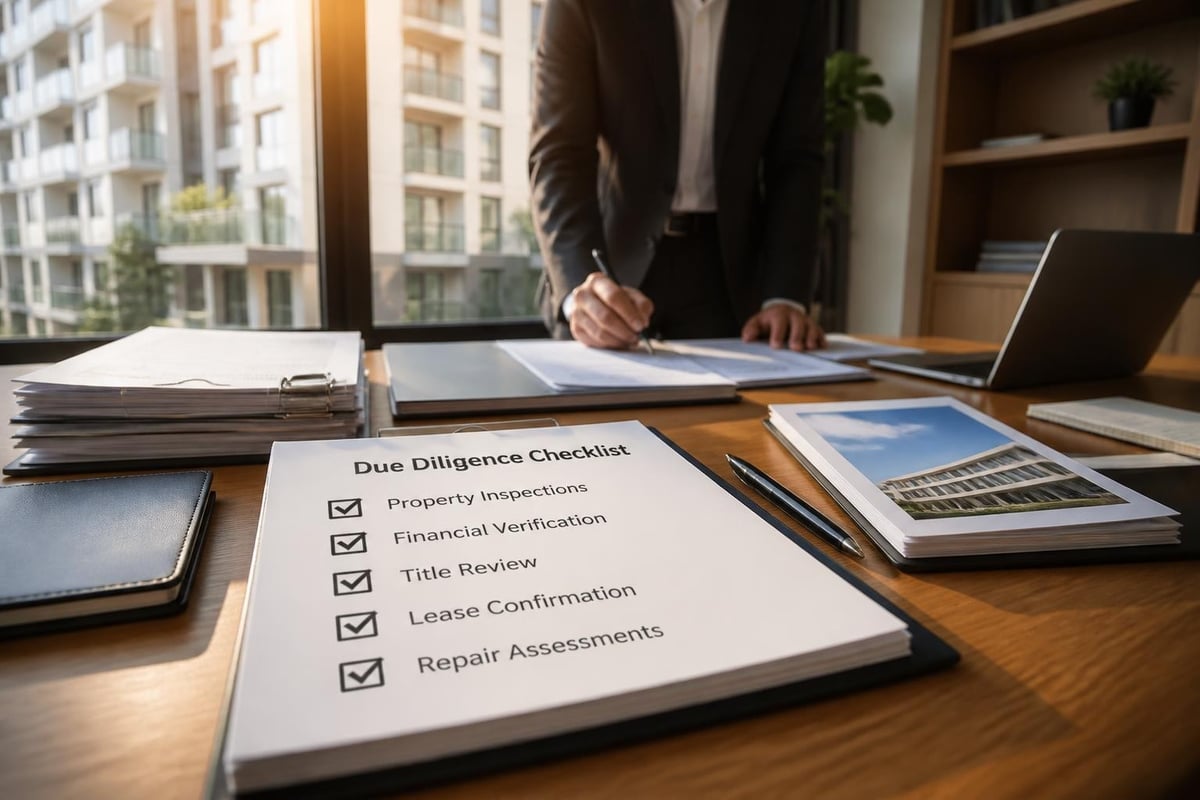
Step 2: Due Diligence Period
The buyer inspects everything.
They'll:
- Walk each property
- Review all financials
- Check title on every address
- Verify tenant leases
- Assess repair costs
- Confirm zoning and permits
This is where deals die if you weren't upfront about problems. Be ready for them to renegotiate if they find surprises.
Step 3: Final Contract and Closing
If due diligence goes well, you move to closing.
Multi-property sales often close all at once in a single transaction. Sometimes they stagger if title issues pop up on one property.
You'll sign:
- Purchase agreement
- Deed for each property
- Bill of sale for personal property (appliances, etc.)
- Tenant notification letters
- Estoppel certificates
Plan for closing to take 2-4 hours if you're doing it in person. Remote closings are common now and cut that time down.
When Selling as a Portfolio Makes Sense
Not every situation calls for a portfolio sale.
Sell as a portfolio if:
- You need to liquidate fast (relocation, financial pressure)
- Properties are similar (same area, condition, tenant type)
- You're burned out on management
- You want one clean exit
- Cash flow is negative or barely breaking even
Sell individually if:
- You have time (6-12 months minimum)
- Properties vary widely in condition or location
- One or two are premium assets worth top dollar
- You're willing to deal with multiple closings
For most Indiana landlords facing life changes, the portfolio route wins. It's simpler. Less stress. Faster cash in hand.
If you're dealing with properties across Hamilton County, Marion County, or Lake County, you can often find local buyers who know those markets inside out.
Finding the Right Buyer Fast
You've got three main options.
Option 1: Direct to Cash Buyers
Companies that buy houses for cash will often take entire portfolios.
Pros:
- Fastest path to closing (2-3 weeks typical)
- No financing contingencies
- Buy as-is (no repairs needed)
- Handle all paperwork
Cons:
- Deepest discount (usually 20-30% below retail)
- Less room for negotiation
This works best when speed matters more than squeezing every dollar.
If you're in Indiana and need to sell quickly with no hassle, cash buyers can close in weeks instead of months.
Option 2: List with a Commercial Broker
Brokers who specialize in investment properties know portfolio buyers.
Pros:
- Access to serious investor networks
- Marketing to qualified buyers only
- Help with pricing and negotiation
- Professional presentation of numbers
Cons:
- Broker fees (typically 4-6% of sale price)
- Longer timeline (3-6 months average)
- You still handle due diligence coordination
Good for sellers who have time and want to maximize price.
Option 3: Direct Marketing to Investors
You can market the portfolio yourself.
Post on:
- Real estate investment forums
- Local investor meetups
- BiggerPockets marketplace
- Commercial real estate platforms
Pros:
- No broker commissions
- Direct communication with buyers
- Control the entire process
Cons:
- Time-consuming
- You screen all tire-kickers yourself
- You handle all paperwork and coordination
- Slower than using professionals
Most sellers don't have the time or patience for this route. But it's an option.
Common Mistakes That Kill Portfolio Deals
I've seen these blow up deals more times than I can count.
Mistake 1: Hiding Property Problems
Buyers will find everything during due diligence.
Disclose upfront:
- Deferred maintenance
- Problem tenants
- Code violations
- Roof or foundation issues
- Unpermitted work
You'll negotiate better when buyers trust you. Hide stuff and they walk or slash the price.
Mistake 2: Refusing Reasonable Discounts
If you insist on retail price for a portfolio, you'll wait forever.
Bulk sales mean bulk discounts. That's the market. Accept it or sell individually.

Mistake 3: Bad Record Keeping
Buyers need clean financials.
Get organized before you start marketing:
| Document Type | What to Include | Why It Matters |
|---|---|---|
| Rent roll | All tenants, lease terms, deposit amounts | Proves income |
| Income/expense statements | 12-24 months of actual numbers | Shows real cash flow |
| Tax returns | Last 2-3 years for the properties | Verifies reported income |
| Repair receipts | Major work done last 3-5 years | Reduces buyer concern |
| Inspection reports | Any recent assessments | Speeds due diligence |
Missing documents kill deals or give buyers excuses to lowball you.
Mistake 4: Emotional Pricing
These aren't your primary homes. They're investments.
Buyers don't care that you:
- Put new windows in three years ago
- Have memories in the properties
- Paid more than they're offering
They care about cash flow and ROI. Price accordingly.
Mistake 5: Ignoring Your Timeline Reality
Be honest about how fast you need out.
If you're facing foreclosure or relocation in 60 days, you don't have time to chase premium pricing. You need a cash buyer who closes fast.
If you've got a year, you can be more selective.
Match your strategy to your actual timeline. Not what you wish it was.
Special Situations: Inherited Portfolios
Inheriting multiple properties creates unique challenges.
You're dealing with:
- Probate processes
- Multiple heirs (maybe)
- Properties you've never managed
- Tenants you don't know
- Markets you don't understand
The fastest path? Sell the whole portfolio as-is.
Get a fair cash offer. Split the proceeds. Move on with your life.
Trying to become a landlord overnight while grieving usually ends badly. Properties in Evansville, South Bend, or Carmel might seem appealing as rentals, but managing them from out of state is brutal if you're not prepared.
Companies that specialize in inherited property purchases handle everything. You don't fix anything. Don't evict anyone. Don't learn property management.
What a Real Estate Portfolio for Sale Actually Sells For
Real numbers from Indiana markets in 2026.
Example 1: Four Single-Family Rentals in Indianapolis
- Individual retail value: $580,000
- Portfolio asking price: $475,000 (18% discount)
- Time to close: 35 days
- Buyer: Local cash investor
Example 2: Six Properties Across Three Counties
- Individual retail value: $725,000
- Portfolio asking price: $565,000 (22% discount)
- Time to close: 21 days
- Buyer: Investment company
Example 3: Three Duplexes in Fort Wayne
- Individual retail value: $890,000
- Portfolio asking price: $780,000 (12% discount)
- Time to close: 67 days
- Buyer: REIT expansion
The discount varies based on:
- Property condition
- Current occupancy
- Location desirability
- Your urgency to sell
- Market conditions
Better properties with solid tenants command smaller discounts. Rough properties needing work? Expect bigger discounts.
Getting Multiple Offers on Your Portfolio
Want buyers competing for your properties?
Make the deal attractive:
- Price it right from day one (15-20% below individual values)
- Have all documents ready (financials, leases, inspections)
- Show clear cash flow with organized income statements
- Disclose all issues upfront so due diligence is smooth
- Be flexible on closing date to accommodate serious buyers
You'll get more activity in the first 30 days than any time after. Come out strong with realistic pricing and solid documentation.
Target investors who already own in your areas. They know the markets. They'll move fast if the numbers work.
Properties in Fishers, Lafayette, or Muncie attract different buyer types. Know who's active in each market.
Your Next Move
Selling a real estate portfolio for sale in 2026 comes down to three decisions.
Decision 1: How fast do you need out?
Your timeline determines everything else. Need cash in 30 days? You're taking a bigger discount. Have six months? You can be more selective.
Decision 2: What discount can you live with?
Portfolio sales mean bulk pricing. Accept 15-25% below individual values or plan to sell separately over the next year.
Decision 3: Who do you trust to close?
Cash buyers close fastest but pay less. Brokers take longer but might find premium buyers. Direct marketing takes the most effort.
There's no perfect answer. Just the right fit for your situation.
Map out your actual needs. Not what sounds good. What you really need.
Then pick the path that gets you there with the least stress.
Selling multiple properties at once simplifies your exit but requires realistic pricing and solid documentation. If you're in Indiana and need to move fast on a portfolio or even a single property, HudREI provides fair cash offers within 24 hours and can close in as little as 2-3 weeks with no repairs, fees, or commissions required. You sell as-is and get on with your life while we handle everything else.