

How to Sell a Probate Property in Indiana (2026 Guide)
Selling a probate property in Indiana? This step-by-step guide shows you how to navigate court approval, taxes, and close fast in 2026.
You just inherited a house in Indiana through probate. Now you need to sell it. Fast.
Maybe you're dealing with court dates, sibling drama, or mortgage payments you can't afford. The good news? Selling a probate property in Indiana isn't as complicated as it sounds once you know the steps.
I've walked dozens of executors through this exact process. Let's break down how to sell a probate property in Indiana without the stress.
What Makes Probate Properties Different in Indiana
Probate is the court process that transfers a deceased person's assets to heirs.
When real estate is involved, you can't just list it and sell it like a regular house.
The court has to approve the sale. Period.
Here's what makes Indiana probate unique:
- The executor must get court permission before accepting any offer
- All debts and taxes come first, before anyone inherits a dime
- Multiple heirs means everyone has to agree (or the court decides)
- The property sells "as-is" in most cases
Indiana law requires the executor to notify all beneficiaries about the sale. You can't skip anyone. Understanding Indiana probate laws and procedures helps you avoid delays that cost money.

Most estates take 6-12 months to settle. But the actual sale can happen much faster if you know what you're doing.
Step 1: Get Appointed as Executor or Administrator
You can't sell anything until the court says you're in charge.
First, file a petition with the probate court in the county where the deceased lived. You'll need the death certificate and the will (if there is one).
The court will issue Letters Testamentary or Letters of Administration. This document proves you have authority to handle the estate.
Without it, you can't sign contracts, accept offers, or transfer the deed. No exceptions.
If there's no will, Indiana's intestacy laws decide who gets what. The court appoints an administrator to handle everything.
Timeline for Appointment
| Task | Typical Timeline |
|---|---|
| File petition with probate court | Week 1 |
| Court hearing scheduled | 2-4 weeks later |
| Letters issued | Same day as hearing |
| Creditor notification period | 3 months minimum |
The creditor period is mandatory. You have to wait before distributing assets.
But you can start preparing the house for sale immediately after getting your Letters.
Step 2: Determine if Court Approval Is Required
Not every probate sale needs a judge's signature.
Indiana offers shortcuts for smaller estates. If the total estate value is under $50,000, you might qualify for a small estate affidavit instead of full probate. Indiana probate shortcuts can save months of waiting.
Three scenarios for selling probate real estate:
- Informal administration - Simpler process, still needs court approval for real estate sales
- Supervised administration - Court watches every move, including the sale
- Small estate affidavit - Skip probate entirely if under threshold and no real estate conflicts
Most houses go through informal administration. It's faster and gives you more control.
Either way, you'll file a "Petition for Authority to Sell Real Estate" before listing the property. The probate process in Indiana follows specific steps that vary by county.
Step 3: Get the Property Appraised
The court wants to know the house is worth what you're selling it for.
Order a professional appraisal. Not a Zillow estimate. A real appraiser who walks the property.
The appraisal protects you in two ways:
- Proves to the court you're getting fair market value
- Helps set a realistic asking price from day one
Cost runs $300-500 in most Indiana counties. Worth every penny.
Some courts require the appraisal before granting permission to sell. Others want it before closing. Check your local probate court rules.
If you're selling an inherited house in Indiana, the appraisal also establishes the stepped-up tax basis for capital gains purposes.
Should You Make Repairs First?
Probably not.
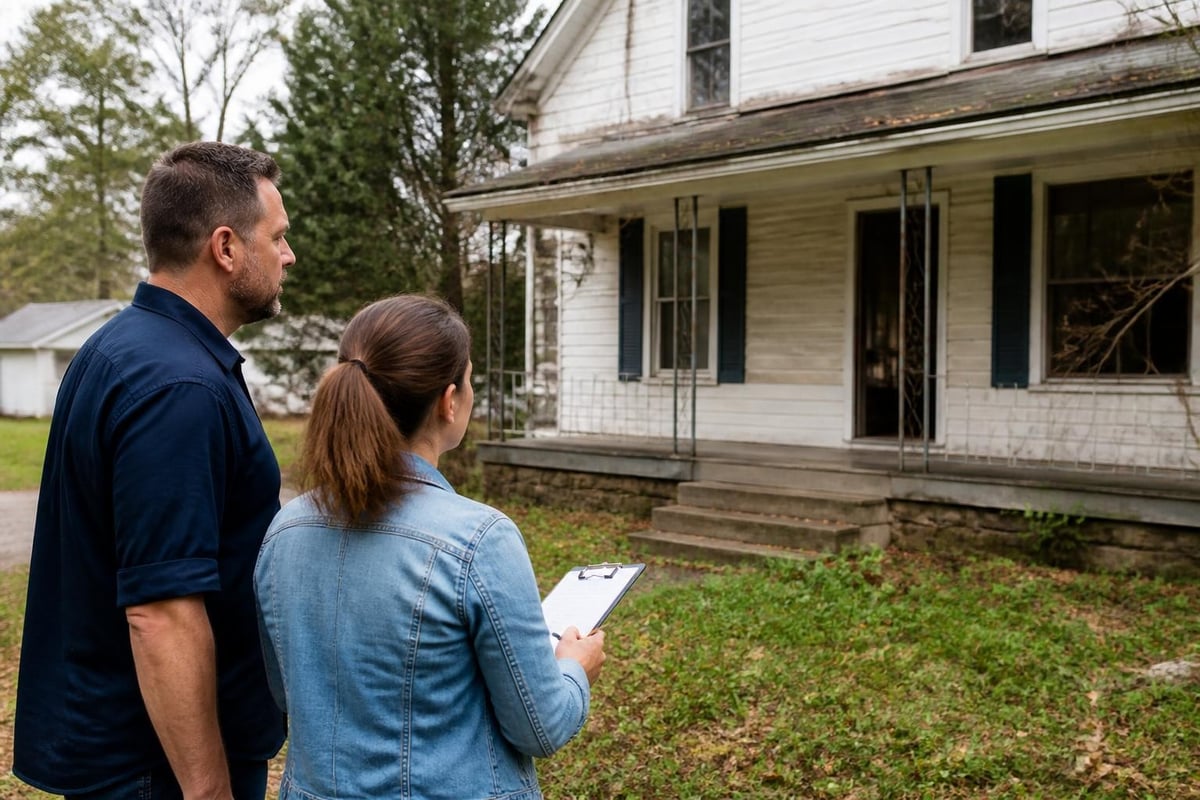
Most probate properties sell as-is. Buyers expect issues. They factor it into their offer.
Here's the math:
- $15,000 in repairs might add $10,000 in value
- You wait 2-3 months for contractors
- You pay holding costs (utilities, insurance, taxes)
- You still don't get retail price
Skip the renovations. Price it right and move on. Companies that work with as-is home buyers understand this reality.
Step 4: File Your Petition to Sell
Now you ask the court for permission.
File a "Petition for Authority to Sell Real Estate" with the probate court. Include:
- Legal description of the property
- Appraisal report
- Proposed asking price
- Reason for the sale
- How you plan to market it
The court schedules a hearing. All heirs get notified. They can object if they want.
No objections? The judge signs the order. Usually takes 2-4 weeks from filing to approval.
With approval in hand, you can now accept offers. But there's a catch.
The Confirmation Hearing Requirement
Most probate sales in Indiana require a confirmation hearing after you get an offer.
Here's how it works:
- You accept an offer
- File the purchase agreement with the court
- Court schedules a confirmation hearing
- Other buyers can outbid at the hearing
- Judge confirms the final buyer
Yeah, it's annoying. The original buyer can get outbid right in the courtroom.
To avoid this drama, some executors use the Cash Offer Program which provides certainty and speed without the risk of auction-style bidding at court.
Step 5: Market and Sell the Property
You have court approval. Time to find a buyer.
Three main options for selling:
- List with a real estate agent (6% commission, longer timeline)
- Sell to a cash buyer (faster, as-is, lower net proceeds)
- Private sale to an heir or family member (needs court approval, same process)
Most executors want this done yesterday. Holding costs add up fast.
Property taxes, insurance, utilities, and maintenance don't stop because someone died. Every month you wait costs money.
Pricing Strategy for Probate Sales
Price it to sell in 30 days or less.
Probate buyers know these are motivated sales. They expect a deal. Don't overprice hoping for a miracle.
| Pricing Approach | Timeline | Buyer Pool |
|---|---|---|
| At appraisal value | 60-90 days | Traditional buyers |
| 5-10% below appraisal | 30-45 days | Broader market |
| 15-20% below appraisal | 7-14 days | Investors, cash buyers |
The faster you sell, the less you pay in holding costs. Do the math on your situation.
If you're thinking "I need to sell my house without a realtor," selling directly to a cash buyer eliminates commissions entirely.
Step 6: Navigate the Confirmation Hearing
You've got an offer. Now back to court.
File the signed purchase agreement with the probate court. The judge schedules a confirmation hearing, usually 2-4 weeks out.
At the hearing:
- Your buyer must be present or represented
- Other qualified buyers can make competing bids
- Each new bid must be at least 10% higher than the last
- The judge confirms the winning offer
This is why cash buyers are attractive for probate sales. They show up, they close, no financing contingencies.
Traditional buyers hate the uncertainty. Many refuse to participate in probate sales because of the confirmation hearing risk.
Avoiding the Confirmation Hearing
Some executors negotiate a "no upset bid" clause in the court order.
If the judge approves, you can skip the confirmation hearing entirely. The first accepted offer stands.
Not all courts allow this. Ask your probate attorney.

Step 7: Close the Sale and Distribute Proceeds
The court confirmed your buyer. Now close the deal.
Work with a title company experienced in probate sales. They'll handle:
- Title search and clearing any liens
- Paying off remaining debts from estate funds
- Preparing the executor's deed
- Distributing net proceeds according to the will
The money doesn't go straight to heirs. It goes into the estate account first.
You must pay all debts, taxes, and administrative costs before anyone inherits. Indiana law is strict on this.
Tax Implications You Can't Ignore
Probate sales trigger tax consequences.
The estate might owe:
- Federal estate tax (only if estate exceeds $13.61 million in 2026)
- Indiana inheritance tax (eliminated in 2013, so you're clear here)
- Capital gains tax on appreciation since date of death
- Final income tax return for the deceased
Good news: The stepped-up basis usually eliminates capital gains. If the house appraised at $200,000 on the date of death and you sell for $200,000, there's no gain to tax.
Sell for more? You pay capital gains on the difference.
Common Mistakes That Cost Executors Money
I've seen the same errors repeatedly.
Avoid these pitfalls:
- Starting repairs before getting court approval to sell
- Accepting an offer without filing for confirmation
- Distributing money to heirs before paying all debts
- Ignoring tax filing deadlines
- Not communicating with all beneficiaries
That last one causes the most problems. Keep everyone informed. Send updates every two weeks.
One angry heir can object to the sale and delay everything by months.
Multiple Heirs, Multiple Headaches
When siblings inherit together, expect disagreements.
One wants to keep the house. Another needs cash now. A third lives out of state and doesn't care.
You need unanimous agreement or court intervention. Period.
As executor, your job is to follow the will and act in the estate's best interest. Not to make everyone happy.
Document every decision. Save every email. Cover yourself.
Alternative: Selling Before Probate Closes
Here's a secret most executors don't know.
You can sell the property before probate fully closes. As long as you have court approval, the sale can happen while other estate matters wrap up.
This is huge for executors paying two mortgages or dealing with property in disrepair.
The timeline looks like this:
- Get appointed (Week 4)
- File petition to sell (Week 6)
- Get court approval (Week 10)
- Accept offer (Week 12)
- Confirmation hearing (Week 16)
- Close sale (Week 18)
- Continue probate administration for remaining assets (Months 5-12)
The house sale is done in under 5 months. The rest of probate continues separately.
When to Consider a Cash Buyer
Traditional buyers bring financing complications.
Appraisals, inspections, loan underwriting, all while the confirmation hearing looms. Many deals fall apart.
Cash buyers make sense when:
- The property needs significant repairs
- You're behind on mortgage payments
- Multiple heirs want different things
- You need to close before a specific deadline
- The house is in a difficult-to-sell location
HudREI specializes in probate properties across Indiana. They handle the court approval process with you and can close in 2-3 weeks once the judge signs off.
No repairs. No showings. No commissions. Just a fair cash offer and a quick close.
Required Documents for Probate Sales in Indiana
Get these ready before you start:
For the court:
- Death certificate (certified copy)
- Original will and any codicils
- Proof of heirs and their contact information
- Property deed showing deceased's ownership
- Professional appraisal
- Purchase agreement when you have a buyer
For the title company:
- Letters Testamentary or Administration
- Court order authorizing the sale
- Confirmation hearing order (if required)
- Tax ID number for the estate
- Final utility bills and property tax statements
Missing any of these delays your closing. Get organized early. For a comprehensive look at selling a probate property in six practical steps, check detailed guides that walk through documentation requirements.
The Real Cost of Selling a Probate Property
Let's talk numbers.
Typical costs for how to sell a probate property in Indiana:
| Expense | Typical Cost |
|---|---|
| Probate attorney fees | $2,000-5,000 |
| Appraisal | $300-500 |
| Court filing fees | $150-300 |
| Real estate commission (if using agent) | 6% of sale price |
| Title insurance and closing costs | 1-2% of sale price |
| Property taxes (prorated) | Varies |
| Utilities and insurance while selling | $200-400/month |
On a $200,000 house sold through an agent, expect $15,000-20,000 in total costs.
Selling directly to a cash buyer eliminates the commission, saving $12,000 right there.
County-Specific Considerations Across Indiana
Probate rules vary slightly by county.
Marion County moves faster than rural counties. Hamilton County requires extra documentation. Lake County has different hearing schedules.
Research your specific county's requirements:
- Check the probate court website for local forms
- Ask about hearing schedules and typical timelines
- Confirm document requirements before filing
- Understand local market conditions for pricing
If you're dealing with property in Marion County, Hamilton County, or other major Indiana markets, local expertise matters.
Working With Professionals Who Understand Probate
You need a team.
Minimum crew for smooth probate sales:
- Probate attorney who knows Indiana law
- Real estate agent experienced in probate (if listing traditionally)
- Title company familiar with executor's deeds
- Accountant for tax implications
Don't cheap out on the attorney. A good probate lawyer saves you more than they cost by preventing mistakes.
Ask specifically about their experience with probate real estate sales. Not all estate attorneys handle property sales regularly.
Selling a probate property in Indiana takes 4-6 months on average, but the actual sale can happen much faster with court approval and the right buyer. The key is starting the court process early and pricing the property realistically. If you're an executor dealing with an inherited property and need to close quickly without the hassle of traditional listings, HudREI provides fair cash offers within 24 hours and works with you through the court approval process to close in as little as 2-3 weeks after confirmation.