

Income Property for Sale: Investor's Guide 2026
Looking for income property for sale? Learn how to find, evaluate, and buy rental properties that generate monthly cash flow in 2026.
You're looking at income property for sale because you want your money working for you. Smart move. Rental properties build wealth while you sleep. But buying the wrong property? That's a nightmare you'll live with for years. This guide walks you through everything you need to know before you buy your first (or next) income property in 2026.
What Makes an Income Property Worth Buying
An income property generates monthly cash flow. That's it. The rent you collect covers the mortgage, taxes, insurance, and repairs, with money left over.
Not every property qualifies. A house that barely breaks even isn't income property. It's a headache with a mortgage.
Look for properties where rent covers all costs plus 20% minimum. That buffer protects you when the furnace dies or a tenant skips town.
Types of Income Property for Sale Right Now
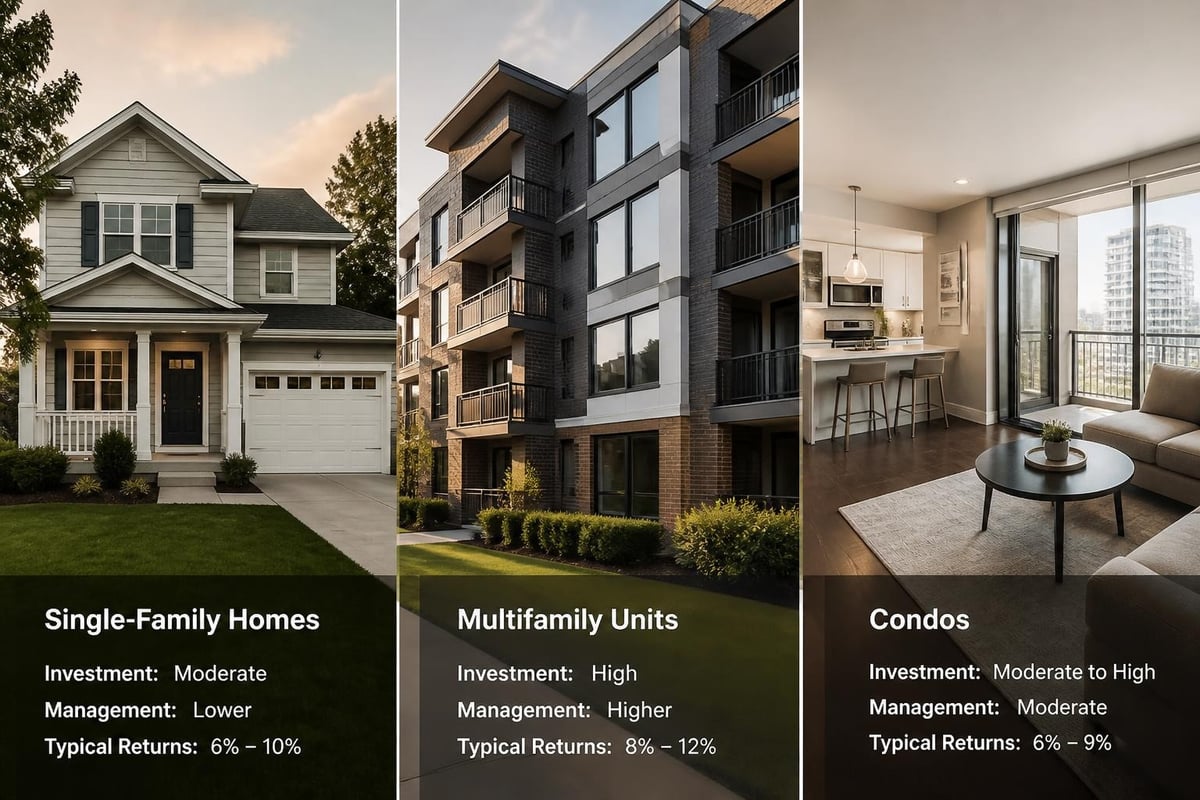
Different properties fit different budgets and skill levels:
- Single-family homes - easiest to manage, easiest to finance, easiest to sell later
- Duplexes and triplexes - live in one unit, rent the others, great for first-timers
- Small multifamily (4-8 units) - higher returns, more complex management
- Condos and townhomes - lower maintenance but HOA fees eat profits
Single-family rentals dominate the Indiana market. They're what most beginners buy. They're what most experts still prefer.
Where to Find Income Property for Sale
You won't find the best deals scrolling Zillow on your couch. Good income properties move fast. Sometimes before they ever get listed.
Start with the MLS. Every property listed by an agent shows up there. Your real estate agent can set alerts for new listings matching your criteria.
Off-Market Properties Move Faster
The best income property for sale never hits the public market:
- Wholesalers - they find distressed properties and flip contracts to investors
- Direct mail campaigns - target tired landlords ready to exit
- Networking events - local real estate investor meetups connect you with sellers
- Foreclosure auctions - high risk, high reward, cash required
- Estate sales - families selling inherited properties often price below market
Indiana has active investor networks in Indianapolis, Fort Wayne, and Lafayette. Show up. Ask questions. The person next to you might have a property to sell.
Running the Numbers Before You Buy
Your emotions don't matter. Only the math matters.
Every income property for sale needs a hard financial analysis. Miss this step and you'll regret it for the next 30 years.
Calculate Your Cash Flow First
Here's the formula that matters:
| Income | Amount |
|---|---|
| Monthly Rent | $1,500 |
| Minus Expenses | |
| Mortgage (PITI) | $900 |
| Vacancy (5-10%) | $75 |
| Repairs (10%) | $150 |
| Property Management (10%) | $150 |
| Net Cash Flow | $225 |
If the number at the bottom is negative, walk away. No exceptions.
Vacancy happens. Repairs happen. Budget for both or go broke pretending they don't.
The 1% Rule Saves Time
Quick filter before you dig deeper: monthly rent should equal 1% of purchase price.
$150,000 house? Needs $1,500/month rent minimum.
Properties that don't hit 1% can still work. But they need exceptional appreciation potential or you're overpaying.
The rental property analysis process involves multiple calculations. But cash flow comes first. Always.
Financing Your Income Property Purchase
Investment property loans work differently than owner-occupied mortgages. Banks want bigger down payments. They charge higher interest rates. They scrutinize your finances harder.
Plan on 20-25% down for investment properties. Some lenders require 30% for beginners.
Loan Options for Income Property
Different loans fit different situations:
- Conventional investment loans - standard option, decent rates, 20-25% down
- Portfolio loans - from smaller banks, more flexible terms
- Hard money loans - fast funding, expensive rates, short terms
- DSCR loans - based on property income, not your job income
- Cash - best negotiating power, fastest closings
Your credit score matters more for investment property. Anything below 680 limits your options. Below 620? You're looking at hard money or cash only.

Best Markets for Income Property in 2026
Location determines everything. Buy in the wrong neighborhood and even a good deal goes bad.
Indiana offers solid opportunities for income property investors. The state balances affordable prices with steady rental demand.
What Makes a Market Good for Rental Properties
Strong job growth brings reliable tenants. Look for cities adding employers, not losing them.
Population growth matters too. More people means more renters. Declining cities mean declining rents.
Check these factors before buying income property for sale in any market:
- Median rent-to-price ratios above 0.7%
- Unemployment below state average
- Population growth over past 5 years
- Landlord-friendly laws and eviction processes
- Property tax rates under 2%
Markets across the country vary wildly in returns. Midwest cities often outperform coastal markets for cash flow.
Indiana Cities Worth Watching
Fort Wayne delivers consistent returns. Indianapolis offers scale and diversity. Lafayette combines college demand with industrial growth.
Smaller cities like Muncie and Elkhart trade lower prices for higher landlord effort. Know what you're signing up for.
Avoiding Bad Income Property Deals
Every market has traps. Properties that look profitable until you own them.
Foundation issues. Terrible tenants. Neighborhoods in decline. Code violations from the previous owner. Titles with clouds that take months to clear.
Red Flags That Scream Walk Away
- Property's been listed over 90 days - there's a reason it's sitting
- Seller won't provide rent rolls - they're hiding vacancy or collection problems
- Deferred maintenance everywhere - you're buying someone else's neglect
- Tenants on month-to-month leases - they'll leave right after you close
- Seller is "motivated" - find out why before you take on their problem
Get a thorough inspection. Not the standard home inspection. An investment property inspection that estimates repair costs and remaining life on major systems.
One major system failure can wipe out two years of profit. New roof? $15,000. HVAC replacement? $8,000. Foundation repair? Don't ask.
Understanding Real Expenses
New investors always underestimate costs. They forget property management takes 10% off the top. They assume zero vacancy. They budget $50/month for repairs on a 70-year-old house.
Here's reality:
| Expense Category | Realistic Budget |
|---|---|
| Vacancy | 5-10% of gross rent |
| Repairs | 10-15% of gross rent |
| Property Management | 8-10% of gross rent |
| CapEx Reserve | 5-10% of gross rent |
CapEx means capital expenditures. The big stuff. Roofs. HVAC. Water heaters. Driveways. Set money aside monthly or get crushed when they fail.
Managing Your Income Property
You have two choices: manage it yourself or pay someone else.
Self-management saves money but costs time. Midnight calls about broken pipes. Chasing late rent. Screening tenants. Coordinating repairs.
Property management companies charge 8-10% but handle everything. They advertise vacancies, screen tenants, collect rent, coordinate repairs, and handle evictions.
What Good Property Management Looks Like
Don't hire the cheapest company. Hire the one that fills vacancies fastest and keeps good tenants longest.
Ask these questions before signing a management contract:
- Average time to fill vacant units?
- Tenant screening process details?
- Markup on repair work?
- How do they handle late rent?
- What's your eviction success rate?
Bad property managers lose you more money than their fee would cost. They place bad tenants. They ignore maintenance until small problems become big ones. They pocket security deposits and disappear.
If you're buying income property for sale in cities like Indianapolis or Fort Wayne, get referrals from other local investors before choosing a manager.
Tax Benefits of Owning Income Property
Rental property offers tax breaks that regular homeowners don't get. These benefits often make the difference between okay returns and great returns.
Depreciation is the big one. The IRS lets you deduct 1/27.5 of your property's value every year. Own a $200,000 rental? That's $7,272 in annual depreciation you can write off.
Deductions That Add Up
You can write off every legitimate business expense:
- Mortgage interest
- Property taxes
- Insurance premiums
- Repairs and maintenance
- Property management fees
- Travel to inspect the property
- Professional services (CPA, attorney)
- Advertising for tenants
These deductions can turn positive cash flow into a paper loss that reduces your tax bill. Talk to a CPA who specializes in real estate before filing.

Building Wealth Through Appreciation
Cash flow pays the bills. Appreciation builds wealth.
Buy income property for sale in growing markets and you capture both. The property generates monthly income while its value climbs year after year.
Forced appreciation works faster than market appreciation. You force value up through renovations, better management, or improving the neighborhood's perception.
Long-Term vs Short-Term Strategies
Some investors flip income properties every few years. Others buy and hold for decades.
Long-term holding offers stability and compound growth. Your tenants pay down the mortgage while rents increase with inflation. In 20 years you own the property free and clear.
Short-term strategies require more work but can accelerate wealth building. Passive income strategies through real estate vary based on your goals and timeline.
Many successful investors use both approaches. They hold core properties long-term while flipping others to generate cash for new acquisitions.
When to Sell Your Income Property
You bought for cash flow and appreciation. Eventually you'll need an exit strategy.
Maybe you're upgrading to larger multifamily. Maybe you're diversifying into different markets. Maybe the property's appreciated so much that selling makes more sense than holding.
Recognizing the Right Time to Exit
Sell when the math changes:
- Neighborhood's declining faster than you can raise rents
- Major repairs needed that exceed one year's cash flow
- Property's appreciated so much that cash-on-cash return dropped below 8%
- 1031 exchange opportunity into better property
- You need capital for bigger deals
Don't sell just because property management got annoying. Fix the management problem instead.
When you're ready to sell, you have options beyond traditional listings. Some investors prefer working with companies that make cash offers for investment properties. If you need to sell quickly, HudREI's Cash Offer Program can close in 2-3 weeks without repairs or commissions.
Scaling Your Income Property Portfolio
Your first rental property is the hardest. The second one's easier. By the third, you've got systems.
Successful investors don't stop at one property. They build portfolios that generate enough passive income to replace their job income.
Smart Growth Strategies
Refinance and pull equity from appreciated properties. Use that cash as down payments on new properties. Your existing tenants fund your expansion.
Stack properties in the same market. One property manager handles all of them. One contractor knows all your buildings. Efficiencies multiply as you scale.
Some investors focus on one property type in one neighborhood. They become the expert on three-bedroom rentals in that specific area. They know what rents should be. They spot deals instantly.
| Portfolio Size | Annual Cash Flow | Management Approach |
|---|---|---|
| 1-3 Properties | $10,000-30,000 | Self-manage possible |
| 4-10 Properties | $30,000-100,000 | Hire property manager |
| 10+ Properties | $100,000+ | Full management team |
Due Diligence Checklist
Never skip these steps when buying income property for sale:
- Title search and insurance - confirms clean ownership
- Property inspection - uncovers hidden problems
- Rent roll verification - confirms actual collected rent
- Lease review - checks tenant terms and obligations
- Utility and tax records - verifies actual costs
- Code compliance check - ensures legal rental status
- Neighborhood analysis - confirms long-term viability
- Comparable sales review - validates purchase price
Missing any of these can cost you tens of thousands. Spend the money upfront on proper due diligence or spend ten times more fixing problems after closing.
Current Market Conditions for Income Properties
The 2026 rental market shows resilience despite economic headwinds. Demand stays strong as homeownership remains out of reach for many Americans.
Interest rates impact investor returns but haven't killed deals. You just need larger down payments to make the numbers work.
Institutional investors continue buying single-family rentals, which validates the asset class. When big money stays in the game, the fundamentals are solid.
Supply and Demand Dynamics
New construction hasn't kept pace with population growth. That means continued upward pressure on rents across most markets.
Rental demand is structural, not cyclical. People always need housing. Economic downturns might slow rent growth but rarely reverse it in good markets.
The multifamily sector shows varied performance by region. Sunbelt cities face oversupply in some submarkets. Midwest and Northeast markets generally show tighter conditions.
Indiana markets benefit from steady job growth without the overbuilding seen in faster-growing states. That balance supports sustainable rent growth and occupancy.
Getting Started as a New Investor
Stop waiting for perfect conditions. They don't exist.
Start small. Buy one property. Learn the business. Make mistakes on a single unit instead of a 20-unit building.
Your First 90 Days
Month 1: Get pre-approved for financing. Interview property managers. Join local investor groups.
Month 2: Make offers on properties that meet your cash flow requirements. Plan on making 10-20 offers before one gets accepted.
Month 3: Close on your first property. Set up proper accounting. Welcome your first tenant.
Most people never buy their first rental property because they overthink it. Analysis paralysis kills more real estate careers than bad deals.
You'll make mistakes. Every investor does. The key is making small mistakes you can learn from instead of catastrophic ones that force you out of the game.
Partner with experienced investors if you're nervous. Bring the capital while they bring expertise. Split profits while you learn.
Legal and Insurance Considerations
Form an LLC before buying income property. It separates your personal assets from rental property liability.
One LLC per property offers maximum protection but creates administrative burden. Many investors use one LLC for their first few properties, then split into separate entities as the portfolio grows.
Insurance Requirements for Rental Property
Standard homeowners insurance doesn't cover rental properties. You need landlord insurance.
Landlord policies cost 15-25% more but cover tenant-caused damage and loss of rental income. Worth every penny when a tenant destroys your kitchen.
Required coverage includes:
- Dwelling coverage - rebuilds after fire or disaster
- Liability coverage - protects against lawsuits (minimum $1M)
- Loss of income - pays rent while property is uninhabitable
- Umbrella policy - additional liability coverage across all properties
Some investors skip adequate insurance to save $500/year. Then one lawsuit wipes out everything they've built.
Working With Real Estate Professionals
Good agents make you money. Bad agents waste your time.
Find an agent who invests in rental property themselves. They understand the numbers. They won't waste your time with properties that don't cash flow.
Interview at least three agents before choosing one. Ask how many investment properties they own personally. Ask how many investor clients they represent.
Building Your Investment Team
You need more than just an agent:
- CPA specializing in real estate - maximizes tax benefits
- Real estate attorney - reviews contracts and handles closings
- Property inspector - finds problems before you buy
- Contractor - provides accurate repair estimates
- Property manager - handles day-to-day operations
- Lender - pre-approves you and closes deals fast
Your team matters more than any single property. Good professionals help you avoid disasters and spot opportunities.
Finding the right income property for sale takes work, but it's worth it when rent checks arrive every month while your equity builds. If you're ready to sell an investment property in Indiana or want to explore your options, HudREI can make a fair cash offer within 24 hours and close in as little as 2-3 weeks with no repairs, fees, or commissions required.